Summary
Shopify SEO automation empowers e-commerce merchants to scale their stores by streamlining repetitive tasks such as generating meta tags, implementing structured data, and optimizing images. While these tools provide a competitive edge by ensuring technical consistency and freeing up resources, successful implementation requires a blend of automated execution and strategic human oversight for keyword targeting and content. Leveraging top-rated apps like TinyIMG and SEO Manager enables Shopify stores to fix critical issues, improve search visibility, and drive significant organic traffic growth, ultimately leading to higher conversions.
For Shopify merchants, especially those running small or mid-sized operations, Shopify SEO automation can be the difference between a store that stagnates and one that scales. When appropriately executed, automation reduces repetitive work, expands reach, and drives sustained growth.
Why Shopify SEO Automation Matters
Most stores rely on Search visibility to drive consistent sales. The challenge is that optimisation demands constant attention: title tags, meta descriptions, structured data, and internal linking rarely manage themselves. Shopify SEO automation removes the friction from these ongoing tasks, freeing up time without sacrificing accuracy.
The Limits
Automation speeds up execution but does not replace human judgment. Strong results come when a merchant combines Shopify SEO automation with thoughtful keyword targeting, content strategy, and product positioning. Automated tools execute the heavy lifting, while strategy provides the direction.
If you spend hours editing product descriptions, fixing broken links, or updating metadata, automation is worth exploring. Shopify SEO automation ensures consistency across a growing catalogue, prevents errors, and improves the store’s Search rankings. The result is better visibility and more reliable traffic, which translates directly into higher conversions.
Before implementing automation, run a full audit. Many tools designed for Shopify SEO automation include diagnostics that reveal gaps in technical setup, missing structured data, or unoptimised pages. Knowing where you stand makes it easier to prioritise what to automate first.
Staged Implementation
A phased rollout is often the safest approach. Begin with technical fixes, like schema markup and meta tag generation, where automation yields quick results. Expand gradually into content optimisation and link-building support. Shopify SEO automation delivers compounding benefits when layered over time.
Balancing Control and Efficiency
Even with automation, oversight remains essential. Algorithms can’t always grasp product nuances or brand voice. The best results come when Shopify SEO automation handles structure and repetition, while humans guide messaging and campaign focus.
Stores that adopt Shopify SEO automation early tend to scale faster. As the catalogue grows, manual SEO becomes unsustainable. Automation ensures each product page remains optimised without requiring hundreds of hours each month. The compounding visibility leads to steady, organic traffic growth.
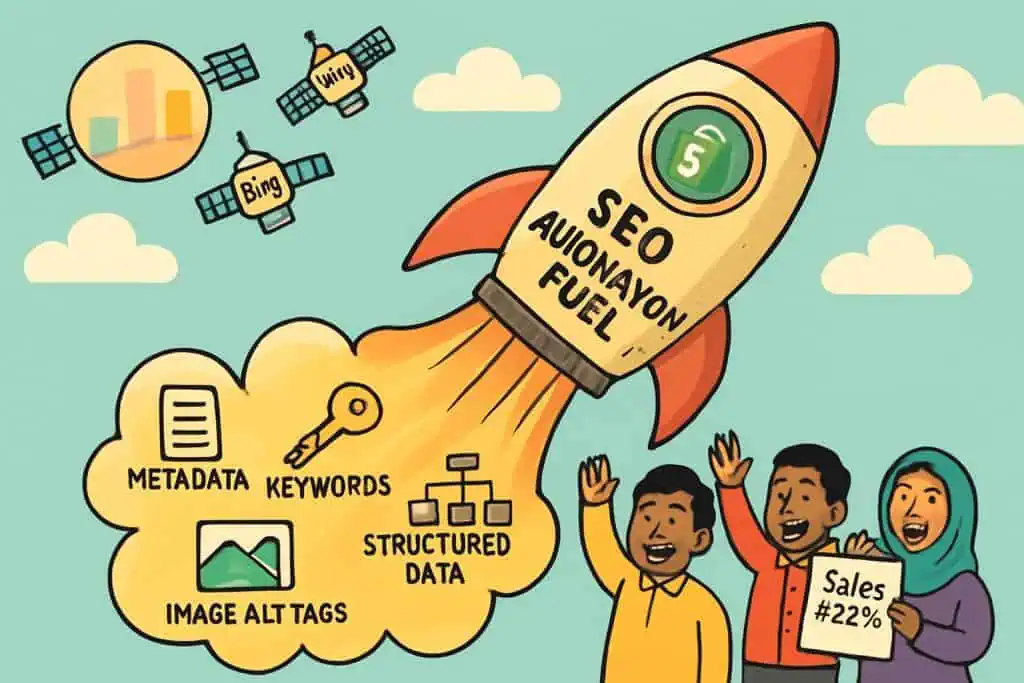
In early 2025, Cali-Strong, a growing e-commerce retailer, faced flat organic traffic despite selling quality products. Once they introduced Shopify SEO automation, the outcome was clear: organic visits increased by 22%, driving sales up without additional ad spend. The shift came from delegating automation to handle repetitive optimisation work that previously consumed their team’s time.
The term refers to tools and apps that automatically manage technical SEO and on-page optimisation. Tasks such as generating meta tags, fixing broken links, updating structured data, and improving internal linking can be run in the background. By automating these essentials, store owners can focus on broader growth strategies while keeping their catalogue fully optimised.
Why the Cali-Strong Story Matters
This example reflects what many Shopify retailers encounter. Built-in features help, but they offer no advantage because every store has access to the same functions. Shopify SEO automation creates that edge, ensuring optimisation is ongoing and precise at scale. It minimises wasted hours on manual corrections and redeploys resources to content, branding, and customer experience.
E-commerce competition continues to intensify, with countless Shopify stores chasing the same audiences. Standing out requires more than the default SEO options. Advanced automation ensures that technical foundations are solid, product pages are consistently optimised, and Search engines can easily surface your store over others. Shopify SEO automation isn’t just a convenience; it’s a lever for visibility, sales, and long-term sustainability.
Understanding Shopify SEO Automation
Shopify SEO automation uses specialised tools and applications to automate repetitive, time-consuming SEO tasks. This allows store owners to focus on strategic decisions rather than manual optimisation. This approach leverages technology to streamline everything from keyword research to metadata generation, making comprehensive SEO accessible even to small business owners without technical expertise.
In today’s digital marketplace, having strong SEO isn’t just a marketing luxury-it’s essential for survival. According to the Search results, SEO provides crucial benefits for small businesses, including increased visibility, cost-effective targeted marketing, enhanced credibility, and competitive advantages. However, manually implementing all necessary SEO elements becomes overwhelming as your store grows, precisely where automation creates significant value.
What Makes Shopify SEO Different?
Shopify stores face unique SEO challenges that generic SEO tools don’t always address effectively:
- Structured data requirements specific to e-commerce products and collections
- Platform-specific URL structures with /collections/ and /products/ paths
- Pagination and filtering can create duplicate content issues
- Image-heavy pages requiring comprehensive optimisation
These platform-specific challenges make specialised Shopify SEO automation tools particularly valuable for store owners seeking to maximise their online presence.

How SEO Automation Saves Time for SMEs
For small and medium-sized businesses, time is the most precious resource. Manual SEO management can consume dozens of hours weekly, which could be invested in product development, customer service, or strategic planning. With Shopify SEO automation, you can control your time and focus on the areas that truly matter for your business’s growth.
Here’s how Shopify SEO automation specifically helps SMEs save time
Elimination of Repetitive Tasks
SEO automation tools can handle numerous repetitive tasks that would otherwise require manual effort:
- Automatically generating meta titles and descriptions for hundreds or thousands of products
- Creating and updating structured data (JSON-LD) across your entire site
- Monitoring and fixing broken links or 404 errors
- Optimising and compressing images while adding appropriate alt text
- Generating and updating sitemaps as your product catalogue changes
According to one case study, tasks that took days can now be completed in minutes or hours. Shopify Flow, for instance, reduced order processing time from two days to one hour.
Consistency Across Your Store
Maintaining consistent SEO practices across a growing product catalogue is nearly impossible manually. Automation ensures every page adheres to the same optimisation framework, eliminating human error and oversight. This consistency is particularly valuable for:
- Multilingual stores requiring translations of SEO elements
- Seasonal businesses with frequent inventory changes
- Stores with extensive product catalogues spanning multiple categories
One SEO tool provider notes that “bulk optimisation features are particularly valuable for stores with seasonal inventory or frequent product updates, allowing quick adjustments while maintaining SEO best practices.
Real-Time Monitoring and Adjustments
Manual SEO requires periodic audits and reviews, often revealing problems only after they’ve impacted your rankings. Automated solutions provide:
- Continuous monitoring of key SEO metrics
- Instant alerts for critical issues
- Automatic implementation of best practices as Search algorithms evolve
This proactive approach prevents problems from developing into serious ranking issues, protecting traffic and revenue from unexpected drops.
Top Shopify SEO Automation Tools for 2025
After analysing the Search results and customer experiences, these tools stand out as the best Shopify SEO apps for automation in 2025:
TinyIMG
Consistently rated as the top overall Shopify SEO app, TinyIMG offers comprehensive automation features, including bulk metadata editing, site audits, and JSON-LD implementation without coding. The app also excels at image optimisation, compressing PNG files by up to 94% and JPG files by 54%, significantly improving page loading times, a critical SEO factor.
Pricing: Free plan available, with paid plans from $9.99 to $49.99/month
Best for: Both beginners and intermediate store owners seeking comprehensive SEO automation
SEO Manager
SEO Manager distinguishes itself with robust technical capabilities specifically designed for e-commerce. It implements advanced structured data, a standardised format for providing information about a page and classifying its content. It manages complex redirect chains and provides detailed JSON-LD markup to enhance e-commerce visibility.
Key Features:
- Advanced JSON-LD structured data implementation
- Bulk SEO optimisation tools
- Automated redirect management
- Template-based meta tag system
Pricing: $29.99 to $79.99/month, depending on store size
Best for: Medium to large Shopify stores needing advanced technical SEO automation
Sherpa: Smart SEO
This tool stands out for its multilingual SEO support, making it ideal for international stores. It offers AI-generated meta tags that save significant time while maintaining quality.
Pricing: Free to $29.99/month
Best for: Multilingual Shopify stores seeking automated solutions across multiple languages
JSON-LD for SEO
Focusing on structured data automation, this specialised tool has delivered impressive results for long-term users. One customer reported a 22% increase in organic traffic after implementing the app.
Key feature: No-coding-required structured data implementation that follows Google’s latest requirements
Best for: Store owners wanting to implement rich snippets and enhanced Search results without technical knowledge
Case Studies of Automated SEO Success
The Search results provide several compelling case studies showing tangible outcomes from implementing SEO automation on Shopify. These success stories are not just about numbers; they reflect the transformation and growth achieved through the strategic implementation of SEO automation. They inspire, showingwhat’ss possible when you harness the power of automation in your SEO strategy.
700% Traffic Growth Through an Optimised Structure
A UK-based men’s t-shirt store implemented a sophisticated multi-level site structure with SEO filters, resulting in a 700% increase in site impressions and organic traffic. This case study demonstrated how effective automation of site structure can quickly help stores rank on the first page of Google for long-tail keyword searches, without a link-building budget.
22% Organic Traffic Increase with Structured Data
A longtime user of JSON-LD for SEO reported that implementing automated structured data led to a 22% increase in organic traffic, resulting in more site visitors and sales. This improvement also enhanced their return on investment from other marketing areas.
247% Overall Growth Through Technical Optimisation
Another case study documented a 247.35% increase in natural traffic through improved technical SEO, content, and keyword research- all implemented through automation tools. Through these proven SEO strategies, the company experienced a 737.136% increase in users.
400% Revenue Growth After Platform Optimisation
Christy Ng achieved 400% revenue growth after implementing Shopify’s automation features. Specifically, Shopify Flow automated its order processing, reducing processing time from two days to one hour, allowing the team to focus on other business-critical tasks.
These case studies demonstrate that properly implemented SEO automation can deliver remarkable results across different types of Shopify stores and niches.
Implementation Guide: Setting Up SEO Automation
Implementing effective SEO automation on your Shopify store requires a strategic approach. Here’s a step-by-step guide to getting started:
1. Conduct a Comprehensive SEO Audit
Before automating, you need to understand your current SEO status:
- Use tools like TinyIMG or SEO Manager to run a full site audit
- Identify critical issues affecting rankings
- Establish baseline metrics for traffic, rankings, and conversions
2. Select the Right Automation Tools
Based on your audit findings, choose tools that address your specific needs:
- For image-heavy stores, prioritise tools with image optimisation
- For complex product catalogues, focus on structured data automation
- For international stores, select tools with multilingual SEO support
3. Implement Automated Technical SEO
Start with technical foundations :
- Set up automated structured data (JSON-LD)
- Configure automated image optimisation and alt text generation
- Implement automated redirect management for out-of-stock products
4. Create Templates for On-Page Elements
Develop templates for:
- Product title formats that include key attributes
- Meta descriptions that drive clicks
- Category page content structures that rank well
5. Establish Monitoring Systems
Configure your automation tools to :
- Alert you about critical SEO issues
- Track performance metrics weekly
- Identify emerging optimisation opportunities
6. Refine Based on Performance Data
Use the data from your automation tools to:
- Adjust templates that aren’t performing well
- Scale successful optimisation strategies
- Address new SEO challenges as they emerge
Common Challenges and Solutions
Even with automation, Shopify SEO presents some common challenges. Here’s how to address them:
Platform Constraints
Solution: While Shopify has certain URL structure limitations, many automation tools can help work around these constraints through:
- Custom tagging systems
- Advanced collection structures
- Strategic internal linking
Duplicate Content
Solution: Automation tools can help by:
- Automatically generating canonical tags
- Creating unique product descriptions at scale
- Managing collection page pagination
Keeping Up With Algorithm Changes
Solution: The best automation tools receive regular updates to align with Search engine algorithm changes, protecting your rankings during major updates.
SEO Automation for Shopify
The future of Shopify SEO automation looks increasingly powered by artificial intelligence. According to the Search results, AI SEO tools can quickly process large volumes of data and identify recurring trends across top-ranking websites and articles, analysing Search engine patterns to optimise content strategically.
Emerging trends in SEO automation include:
- AI-powered content generation that creates unique, optimised product descriptions
- Predictive analytics that identify ranking opportunities before competitors
- Voice Search optimisation automation for emerging Search patterns
- Personalised SEO that adapts to individual user behaviour
Store owners who embrace these advanced automation technologies will likely gain significant competitive advantages in the increasingly crowded e-commerce arena.
Sources
- https://www.ecommerce-gold.com/shopify-seo-apps/
- https://supramind.com/case-studies/shopify-seo-case-study-furniture-growth
- https://www.ilanadavis.com/blogs/articles/22-increase-in-organic-traffic-cali-strong
- https://www.brod-ai.com/blog/best-automated-seo-solution-for-shopify-stores
- https://www.shopify.com/blog/small-business-seo
- https://pagefly.io/blogs/shopify/shopify-seo-tools
Q&A
Q1: What is Shopify SEO automation, and which tasks does it handle?
A1: Shopify SEO automation uses specialised apps to automate technical and on-page SEO tasks. It handles repetitive work such as generating meta tags, implementing structured data (JSON-LD), fixing broken links, optimising images, and creating sitemaps, ensuring store-wide consistency with minimal manual effort.
Q2: Why is Shopify SEO automation essential for small to mid-sized businesses (SMEs)?
A2: It is crucial for SMEs because it saves significant time on manual SEO, allowing owners to focus on core growth activities like product development and marketing. Automation improves Search engine rankings by consistently applying best practices across an extensive product catalogue, driving sustained organic traffic and sales.
Q3: What are the best Shopify SEO automation tools recommended for 2025?
A3: The top recommended tools for 2025 are TinyIMG for comprehensive SEO and image optimisation, SEO Manager for advanced technical SEO, Sherpas: Smart SEO for multilingual stores, and JSON-LD for SEO for specialised structured data implementation.
Q4: Can automation replace a human SEO strategist entirely?
A4: No, automation is a tool to execute tasks efficiently, but it does not replace human judgment. A successful strategy still requires a person to guide keyword targeting, content creation, and brand messaging, while the software handles the technical implementation and heavy lifting at scale.