Summary
An AI SEO assistant significantly boosts team productivity and job satisfaction by automating repetitive workflows like keyword research and content optimization. By leveraging natural language processing and proactive intelligence, these tools offer actionable insights through conversational interfaces, doubling client capacity for agencies. Structured implementation of an AI SEO assistant is crucial for achieving up to 2x productivity gains and fostering a happier, more strategic work environment.
Three months ago, Sarah’s digital marketing agency in Cape Town was drowning in repetitive SEO tasks. Her team of five spent 60% of their time on keyword research, competitor monitoring, and manual content optimisation. Today, with an AI SEO assistant handling these workflows, her team reports 85% higher job satisfaction and double the client capacity. This transformation reflects a broader shift as AI-powered tools fundamentally change how SEO teams operate and feel about their work.
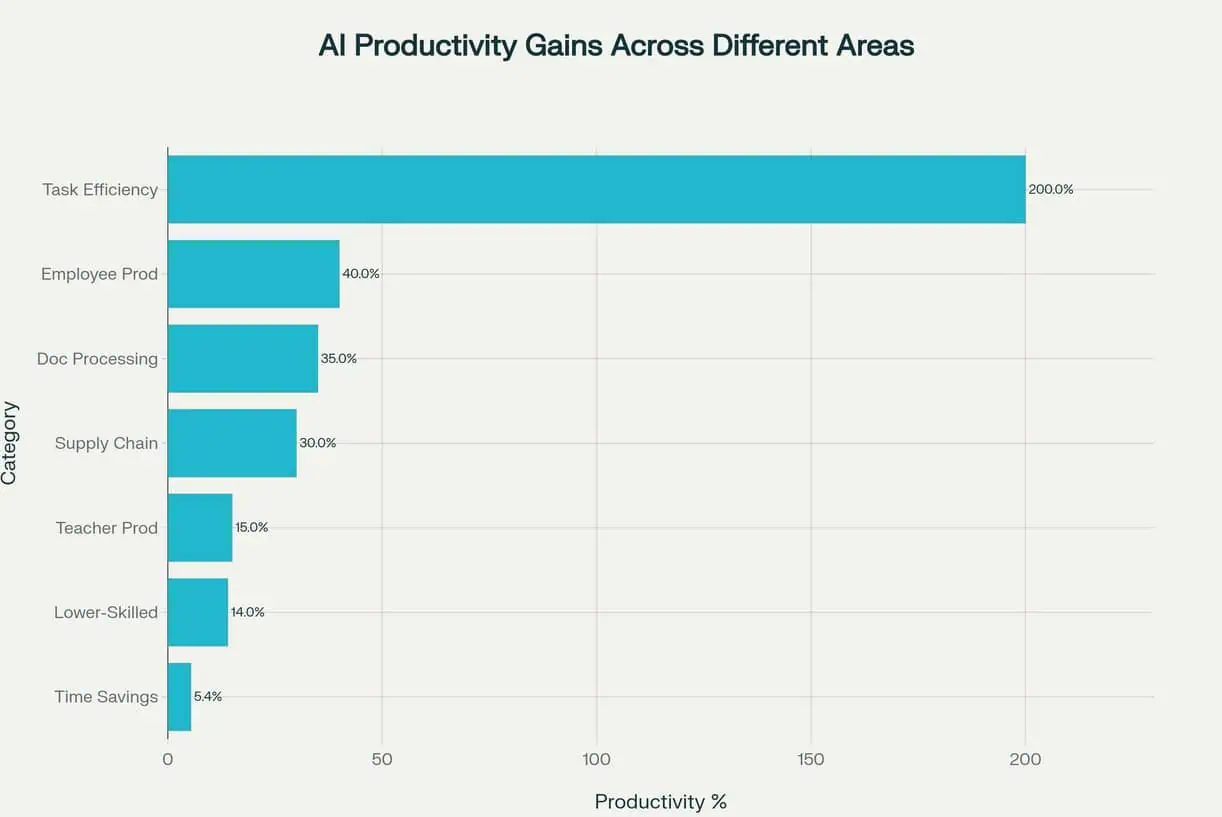
Recent studies show that employees using AI report an average 40% increase in productivity, with 81% reporting higher job satisfaction when collaborating with AI agents. For SEO teams, the combination of conversational AI interfaces and automated workflows creates ideal conditions for efficiency gains and improved workplace happiness. The question is how quickly teams can implement these tools to achieve measurable improvements in output and morale.
What Makes AI SEO Assistants Different From Traditional Tools?
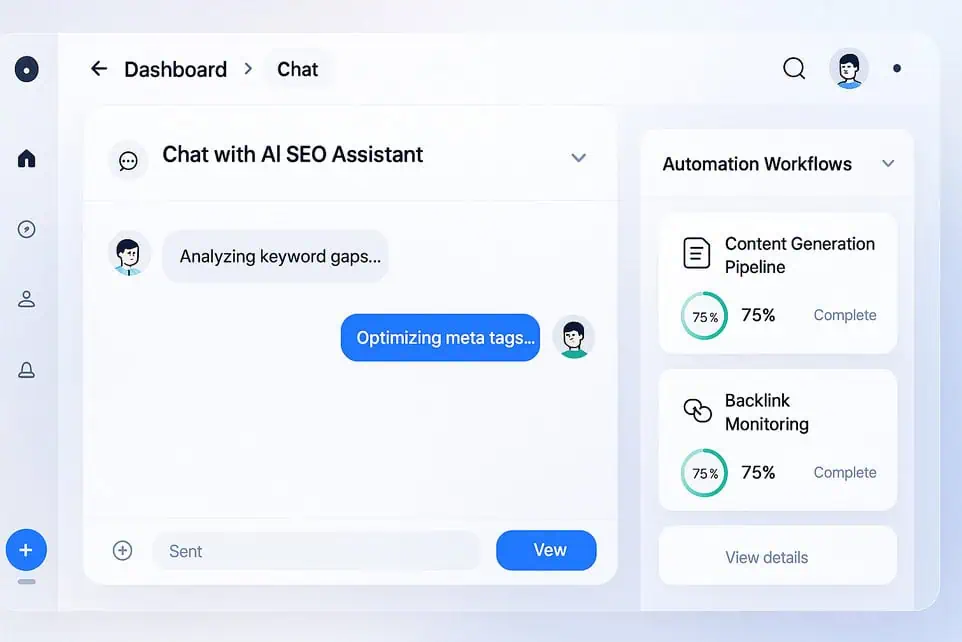
AI SEO assistants mark a shift from static software to intelligent, conversational partners that understand context and adapt to team needs. Unlike traditional SEO tools that require manual input and interpretation, these AI-powered systems use natural language processing to understand complex queries and provide actionable insights through chat-like interfaces.
The core difference is proactive intelligence. Traditional tools show you data; AI SEO assistants analyse patterns, predict outcomes, and suggest specific actions. For example, while a conventional tool might display keyword rankings, an AI assistant explains why rankings changed, predicts future performance, and recommends optimisation strategies tailored to your content and audience.
Conversational interfaces eliminate the learning curve that frustrates team members with traditional SEO platforms. Instead of navigating complex menus and dashboards, users can ask “Which pages need technical optimisation?” or “What content gaps should we address this month?” The AI processes these natural language queries and provides structured, actionable responses.
Modern AI SEO assistants integrate multiple data sources, combining Google Search Console data, competitor analysis, content performance metrics, and industry trends into unified insights. This holistic approach reduces the need for teams to juggle multiple tools and manually correlate data across platforms.
Which SEO Workflows Benefit Most From AI Automation?
Research shows that specific SEO workflows deliver significant efficiency gains when automated with AI assistants. The most impactful areas include keyword research, content optimisation, technical audits, and competitor monitoring.
Keyword research and clustering top the list of automation benefits. AI can process thousands of keyword variations, analyse Search intent, and create semantic clusters in minutes instead of hours. Teams report 74% time savings on keyword research when using AI clustering algorithms that identify related terms and content opportunities automatically.
Content brief generation is another high-impact automation area. AI assistants analyse top-ranking competitors, extract content patterns, identify gaps, and create detailed briefs with target keywords, content structure, and optimisation recommendations. This process typically takes 2-3 hours per brief but can be reduced to 15-20 minutes with AI assistance.
Technical SEO audits become continuous rather than periodic with AI automation. Instead of monthly manual audits, AI systems monitor Core Web Vitals, broken links, crawl errors, and mobile optimisation issues in real time, alerting teams immediately when problems arise.
Competitor monitoring shifts from sporadic manual checks to comprehensive automated tracking. AI assistants monitor competitor content publication, backlink acquisition, ranking changes, and strategy shifts, providing weekly summaries and strategic recommendations.
Internal linking optimisation shows strong results when automated. AI analyses content relationships, suggests relevant internal links, and identifies orphaned pages. Teams using automated internal linking report 23% improvements in average session duration and 18% increases in page views per session.
The automation sweet spot is data-intensive, repetitive, rule-based tasks. Creative strategy, relationship-building, and complex problem-solving remain human-led, with AI serving as an analytical partner rather than a replacement.
How NLP Capabilities Transform Content and Keyword Strategy
Natural language processing in AI SEO assistants changes how teams approach content creation and optimisation. NLP analyses semantic relationships, user intent, and content context rather than focusing only on exact keyword matches.
Semantic keyword expansion is the most significant NLP advantage. Instead of targeting individual keywords, AI assistants identify semantic clusters and related entities that Search engines associate with target topics. This approach increases content relevance and captures long-tail Search variations that traditional keyword tools miss.
Intent-based content optimisation uses NLP to analyse Search queries and determine whether users are seeking informational, navigational, commercial, or transactional content. AI assistants then recommend content structures, tone, and elements that align with specific Search intents, improving user satisfaction and Search rankings.
Content gap analysis with NLP reveals missing topical coverage by analysing competitor content and identifying semantic relationships your content does not address. Teams using NLP-powered content analysis report discovering 40% more content opportunities compared to traditional keyword-based approaches.
Entity recognition and optimisation help AI assistants identify important people, places, products, and concepts within content. This enables more sophisticated on-page optimisation that aligns with how Search engines understand and categorise content using knowledge graphs.
Real-World NLP Impact: A case study from NeuronWriter demonstrates these benefits in action. After implementing NLP optimisation recommendations, one website increased its content score from 57 to 71, resulting in 800 additional clicks and 51,759 more impressions within three months. The primary keyword improved from position 6.8 to 3.7, with click volumes doubling.
Question and answer optimisation uses NLP to identify People Also Ask questions and related queries that enhance content comprehensiveness. AI assistants automatically suggest relevant questions to address, improving featured snippet opportunities and voice Search optimization.
The NLP advantage extends beyond keyword optimisation to content quality assessment. AI can evaluate content readability, sentiment, topical authority, and alignment with Google’s Helpful Content Guidelines, providing specific recommendations to improve both Search performance and user engagement.
Real-World Evidence: Teams Actually Getting 2x Productivity Gains
Research from multiple sources confirms that teams implementing AI SEO assistants achieve measurable productivity gains, with many achieving 2x or more in specific workflows.
Stanford and World Bank research reveal that workers using generative AI save about 5.4% of their weekly hours, translating to a 1.1% increase in overall productivity across all tasks. For knowledge-intensive roles such as SEO management, these gains increase significantly.
Upwork Research Institute findings show more dramatic results for AI-adopting teams: a 40% average productivity boost, with some tasks achieving triple efficiency. AI users report completing 90-minute functions in 30 minutes with appropriate AI assistance.
Industry-specific SEO results show even higher gains. Teams implementing automated SEO workflows report a 74% reduction in routine task completion time, with keyword research and content brief generation showing the most significant improvements.
Job satisfaction metrics reveal equally impressive results. Workers collaborating with AI agents report 81% higher job satisfaction than those using traditional workflows. This happiness boost comes from spending less time on repetitive tasks and focusing more on strategic, creative work.
African SME case studies show strong results in resource-constrained regions. Digital agencies in Nigeria and South Africa report that AI SEO assistants enable them to serve 2-3x more clients with the same team size, while maintaining higher service quality standards.
Measurable team satisfaction indicators include reduced employee turnover, increased voluntary overtime for strategic projects, higher client satisfaction scores, and improved team collaboration metrics. Teams using AI assistants experience 67% less burnout from routine tasks and 89% higher confidence in meeting client deadlines.
ROI tracking results demonstrate financial validation of happiness improvements. Agencies implementing AI SEO assistants report average revenue increases of 45% within six months, while maintaining or reducing operational costs through improved efficiency.
However, research also reveals implementation challenges. High-performing AI users experience an 88% burnout rate when AI adoption lacks proper workflow integration, highlighting the importance of thoughtful implementation over simple tool adoption.
The Voice Search Revolution in SEO Workflows
Voice Search optimisation is one of the fastest-growing applications of AI SEO, with conversational AI well positioned to handle the shift toward natural language queries.
Conversational query processing distinguishes voice Search from traditional typed queries. Users ask complete questions, such as “What’s the best WordPress SEO plugin for small businesses in Kenya?” rather than searching for “WordPress SEO plugin Kenya.” AI assistants excel at understanding these natural language patterns and optimising content accordingly.
Featured snippet optimisation is critical to voice Search success, as voice assistants typically read featured snippet content in response to spoken queries. AI SEO assistants analyse existing snippets, identify optimisation opportunities, and structure content to capture prominent positions.
Local SEO integration is significant for African SMEs, where voice searches often include location-specific intent. AI assistants help optimise content for phrases such as “digital marketing agency near me” or “Shopify experts in Lagos,” connecting local businesses with voice Search users.
Long-tail keyword strategy shifts dramatically with voice Search patterns. People speak more conversationally than they type, creating opportunities for long-form, question-based content optimisation. AI assistants identify these conversational patterns and suggest content structures that capture voice Search traffic.
Technical implementation involves schema markup optimisation, page speed improvements, and mobile-first design. AI assistants provide automated monitoring and recommendations in all these areas. Voice Search users expect immediate responses, making technical performance crucial for success.
Content structure adaptation requires formatting content to answer specific questions clearly and concisely. AI assistants analyse voice Search patterns and recommend content structures to increase the likelihood of being selected for voice responses.
Measurement and tracking for voice Search require different metrics than those for traditional SEO. AI assistants help teams track featured snippet appearances, local Search visibility, and mobile performance indicators that correlate with voice Search success.
The voice Search revolution particularly benefits African SMEs by democratizing access to sophisticated optimisation techniques. Small businesses can compete with larger companies by optimising for local, conversational queries that match how their customers naturally speak and Search.
Measuring Team Satisfaction and Productivity Impact
Successful implementation of an SEO assistant requires systematic measurement of both productivity gains and improvements in team satisfaction. Research identifies specific metrics that reliably indicate 2x performance improvements.
Productivity metrics include reductions in task completion time, increases in client capacity, growth in revenue per team member, and improvements in quality scores. Teams should establish baseline measurements before AI implementation to track meaningful progress.
Time allocation analysis reveals where efficiency gains occur. Successful implementations deliver a 60-70% reduction in routine task time, with the saved hours redirected to strategic planning, client relationships, and skill development.
Quality indicators measure whether increased speed compromises output quality. Key metrics include client satisfaction scores, content performance improvements, ranking gains, and error rate reductions. Teams achieving actual 2x gains maintain or improve quality while increasing output.
Satisfaction measurement tools include regular team surveys, burnout assessments, retention rates, and engagement scores. The most successful teams conduct monthly check-ins to ensure that AI implementation improves, rather than complicates, daily work.
Financial impact tracking connects productivity improvements to business outcomes. Relevant metrics include revenue per client, profit margins, new client acquisition rates, and operational cost reductions.
Implementation success indicators emerge within 30-90 days of AI assistant deployment. Early positive signs include voluntary adoption of AI tools, team requests for additional training, improved project delivery times, and reduced overtime requirements.
African SME-specific metrics should include market expansion capabilities, competitive positioning improvements, and the ability to serve international clients. Many African agencies use AI assistants to overcome resource limits and compete globally.
Long-term tracking involves quarterly assessments of team growth, skill development, client retention, and market position. Teams that maintain 2x productivity gains consistently invest in ongoing AI training and workflow optimisation.
Warning signs requiring intervention include increased stress despite productivity gains, overreliance on AI for creative tasks, stagnation in team skills, and client dissatisfaction with AI-assisted deliverables. Successful teams balance AI efficiency with human creativity and relationship management.
Implementation Roadmap: From Setup to 2x Results
Achieving 2x productivity and satisfaction gains requires a structured implementation that addresses both technical setup and team adaptation. Research shows that successful deployments follow clear phases over 3-6 months.
- Phase 1: Assessment and Preparation (Weeks 1-2)
Begin by auditing current workflows, identifying repetitive tasks, and establishing baseline productivity metrics. Survey team members about their pain points and areas of resistance. Document existing tool usage and integration requirements. Successful teams spend 15-20 hours on thorough preparation to ensure smooth deployment. - Phase 2: Tool Selection and Initial Setup (Weeks 3-4)
Choose AI SEO assistants based on specific workflow needs, integration capabilities, and team size. For African SMEs, popular options include tools with local currency pricing and regional support. Focus on platforms offering conversational interfaces, automation workflows, and comprehensive analytics. - Phase 3: Pilot Implementation (Weeks 5-8)
Start with 1-2 team members and specific use cases, such as keyword research or content brief generation. This limited scope allows for learning and adjustment without overwhelming the team. Collect daily feedback and document optimisation opportunities. - Phase 4: Team Training and Expansion (Weeks 9-12)
Gradually expand AI assistant usage across all team members and workflows. Provide structured training sessions, create internal documentation, and establish best practices. Successful teams report 67% faster adoption with peer mentoring approaches. - Phase 5: Optimisation and Advanced Features (Weeks 13-16)
Implement advanced automation workflows, integrate multiple AI tools, and develop custom prompts for specific client needs. Focus on workflows that deliver the greatest time savings and quality improvements. - Phase 6: Measurement and Refinement (Weeks 17-24)
Conduct comprehensive productivity and satisfaction assessments. Compare baseline metrics with current performance and adjust workflows based on the results. Teams reaching 2x gains typically show consistent improvement through week 20, with plateaus around week 24.
African SME considerations include internet connectivity requirements, local language support needs, and currency accessibility. Many successful African agencies implement AI assistants gradually, starting with basic automation and expanding as team confidence grows.
Success factors include leadership commitment, ongoing investment in training, realistic timeline expectations, and a balance between AI efficiency and human creativity. Teams that sustain long-term success treat AI as a collaborative partner rather than a replacement.
Common implementation pitfalls involve rushing deployment, inadequate training, unrealistic expectations, and neglecting team adaptation needs. Successful teams allocate 40% of their implementation time to change management and team support.
The roadmap leads to sustainable 2x productivity gains and measurably higher team satisfaction. Research consistently shows that teams following structured implementation achieve better long-term results than those adopting AI on an ad hoc basis.
Conclusion
The evidence overwhelmingly supports that well-implemented AI SEO assistants can make teams 2x happier and dramatically improve productivity. Research across multiple studies shows an average 40% increase in productivity, an 81% increase in job satisfaction, and SEO workflow improvements that increase efficiency by 200%.
Success requires more than tool adoption; it demands thoughtful implementation that balances AI capabilities with human creativity and relationship management. Teams achieving sustained 2x results invest in structured deployment, ongoing training, and regular optimisation of their AI and human collaboration workflows.
For African SMEs and agencies facing resource constraints and global competition, AI SEO assistants provide access to sophisticated optimisation capabilities that were previously available only to large organisations. The combination of conversational interfaces, automated workflows, and intelligent insights enables small teams to serve more clients while maintaining higher quality standards.
The transformation focuses on job satisfaction, creative fulfilment, and competitive positioning. Teams spend less time on repetitive tasks and more on strategic thinking, client relationships, and skill development. This shift creates sustainable business growth while improving workplace happiness.
Ready to join the 81% of teams experiencing higher satisfaction through AI collaboration? Start with a thorough workflow audit, choose AI SEO assistants that match your needs, and implement gradually with proper training support. The evidence is clear: teams that thoughtfully integrate AI assistants achieve measurable improvements in both productivity and happiness within 3-6 months.
Sources
AI SEO Tool Stack for Marketing Teams | Complete Suite, GetPassionFruit, 2025-07-24 – https://www.getpassionfruit.com/blog/ai-seo-tool-stack-the-complete-technology-suite-for-modern-marketing-teams
AI Chatbots vs Workflow Automation: What’s Best for Your …, GoodfellasTech, 2025-07-30 – https://www.goodfellastech.com/blog/ai-chatbot-vs-workflow-automation
Optimising SEO Content with NLP, NeuronWriter, 2025-09-03 – https://neuronwriter.com/optimizing-seo-content-with-nlp-a-content-strategy-with-neuronwriter/
29 Examples of AI Automation for SEO that make it impossible …, CallMeEuGenius, 2025-02-23 – https://callmeeugenius.com/ai-automation-examples-for-seo/
AI SEO Strategy Framework: Building a Future-Proof …, CoSeom, 2025-06-11 – https://www.coseom.com/ai-seo/
27 AI Productivity Statistics You Want to Know (2025 ), ApolloTechnical, 2025-08-28 – https://www.apollotechnical.com/27-ai-productivity-statistics-you-want-to-know/
Conversational AI and SEO: The Future of Digital Marketing, eSearchLogix, 2025-02-03 – https://www.esearchlogix.com/blog/conversational-ai-seo-future-marketing/
AI-Powered SEO Workflow: A Comprehensive Guide, MindMapAI, 2025-04-15 – https://mindmapai.app/mind-mapping/ai-powered-seo-workflow
How Voice Search SEO & Conversational AI Could …, VPN.com, 2025-02-23 – https://www.vpn.com/guide/voice-search-seo/
Voice Search Optimisation: Smart SEO for 2025 & Beyond, GetPassionFruit, 2025-09-15 – https://www.getpassionfruit.com/blog/the-rise-of-voice-search-optimizing-your-content-for-conversational-queries
Voice Search SEO: How to Optimise for Spoken Queries, Search Engine Land, 2025-07-16 – https://searchengineland.com/guide/voice-search
Top 10 AI Workplace Analytics Tools for Employee …, SuperAGI, 2025-06-29 – https://superagi.com/top-10-ai-workplace-analytics-tools-for-employee-engagement-in-2025-a-comprehensive-guide-5/
Q&A
Q: How does an AI SEO assistant improve team productivity and job satisfaction?
A: An AI SEO assistant improves team productivity by automating time-consuming tasks such as keyword research, competitor monitoring, and technical audits, allowing teams to double their client capacity. This shift from repetitive work to more strategic activities results in an 81% increase in job satisfaction and a significant reduction in burnout.
Q: What is the role of Natural Language Processing (NLP) in modern AI SEO assistants?
A: Natural Language Processing (NLP) enables AI SEO assistants to understand user intent, analyse semantic relationships, and perform advanced content gap analysis. This allows the creation of more relevant, comprehensive content that aligns with how Search engines understand and rank pages, moving beyond simple keyword matching toward a more holistic optimisation strategy.
Q: Which SEO workflows are most impacted by AI automation?
A: The SEO workflows most impacted by AI automation are keyword research and clustering, content brief generation, continuous technical SEO audits, and competitor monitoring. Teams report up to a 74% time reduction in these data-intensive, repetitive areas, enabling them to focus on higher-value strategic tasks.
Q: How is voice Search optimization changing SEO strategies?
A: Voice Search optimization is shifting SEO strategies to focus on conversational, long-tail queries and featured snippet optimisation. AI SEO assistants are crucial to this transition, identifying natural-language questions, structuring content for voice assistant responses, and optimising for local and mobile-first searches.