
Intro
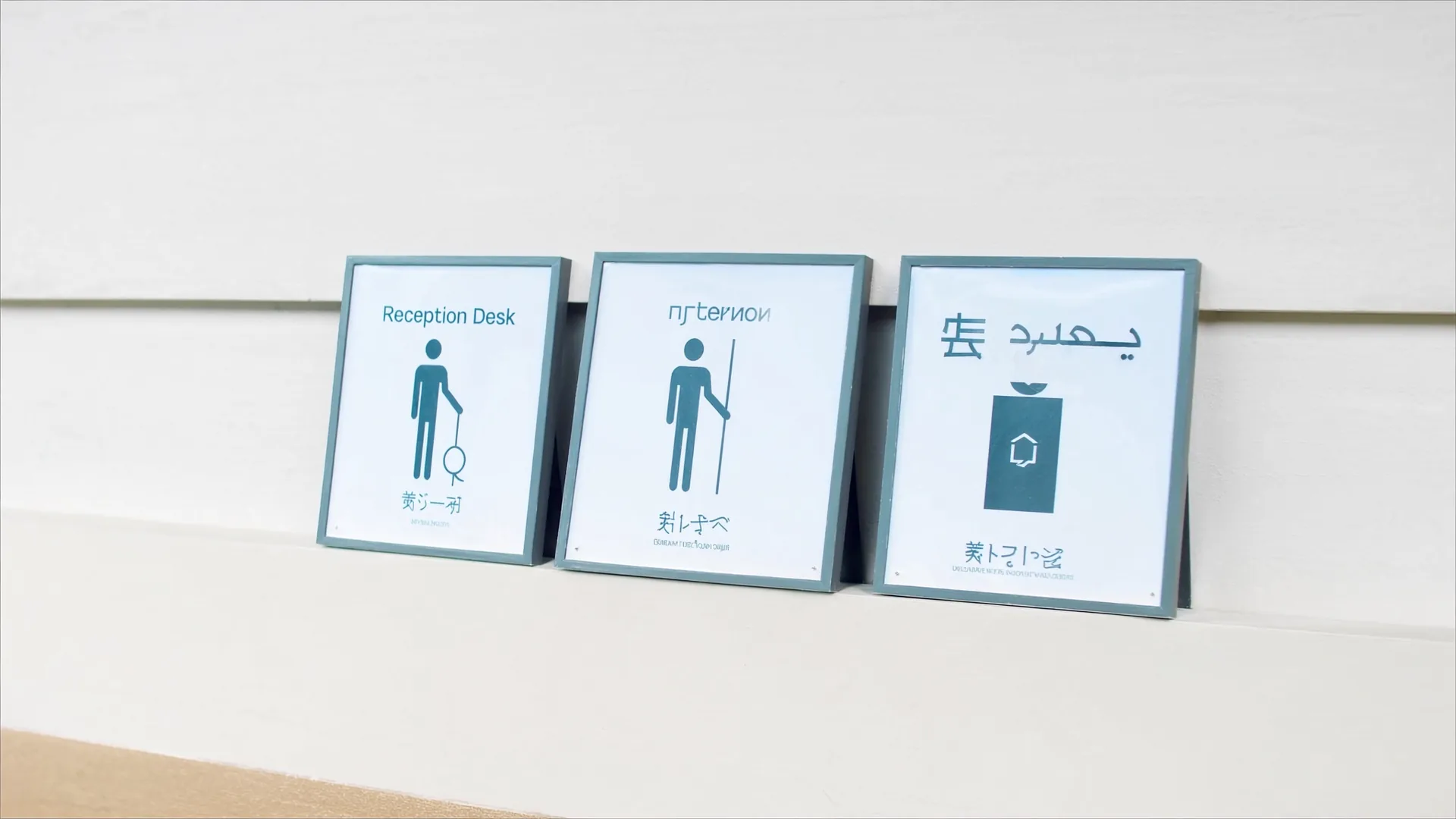
A French traveler asks ChatGPT for “meilleurs hôtels de luxe à l’île Maurice.” An English-speaking traveler asks “best luxury hotels in Mauritius.” A German guest asks “beste Luxushotels Mauritius.”
Same engine. Same week. Same intent. Three different shortlists, three different source sets, three different competitive framings.
For a premium hospitality brand selling into multi-language travel markets, that asymmetry is the operating problem. A score built only on English prompts does not describe what a French- or German-speaking guest is actually being told.
This page explains why AI engines diverge across languages, what changes from one language to the next, and the five language-aware actions a premium brand should take.
Score your brand across languages
Why the same prompt in two languages returns different answers
Chen, Wang, Chen and Koudas (2025) benchmarked AI Search services across engines, queries and languages. Their finding is direct: AI Search services “differ significantly from each other in their domain diversity, freshness, cross-language stability, and sensitivity to phrasing.” Their third strategic imperative reads: “Adopt engine-specific and language-aware strategies.”
Three mechanisms drive the divergence.
First, the retrieval corpus differs by language. When a prompt is issued in French, the engine weights French-language sources, French-language press, French Wikipedia, French review aggregators. Switch to English and the corpus shifts to English domains. The brand may be well-covered in one corpus and thin in the other.
Second, prompt phrasing rarely translates one-to-one. “Boutique hotel” carries connotations English-speakers share. “Hôtel de charme” is the nearest French equivalent, but the buyer intent and the competitive set are not identical. The engine retrieves what each phrase actually means in its own language, not what the translator intended.
Third, freshness behaves differently across languages. A press release issued in English may be indexed and cited within days. The French translation, published a week later on a smaller outlet, may never reach the same retrieval weight. Cross-language stability is not symmetrical.
The consequence: cross-language AI visibility is not a translation problem. It is a separate measurement problem.
What changes across languages
Four dimensions move from one language to the next.
Sources. The cited domains are not the same. English answers about Mauritius lean on Condé Nast Traveler, Travel + Leisure, The Telegraph. French answers lean on Le Figaro, Le Point, Geo, Voyageurs du Monde. The press strategy that wins in one language does not automatically win in the other.
Competitors. The brands named alongside yours change. A French-speaking guest may be told to compare your resort against properties marketed primarily to the French market, even though your English-language competitive set looks different. The competitor list is language-shaped.
Framing. The descriptors differ. English answers may emphasize “exclusive,” “secluded,” “five-star.” French answers may emphasize “raffinement,” “art de vivre,” “expérience authentique.” The brand attribute that is cited is not the brand attribute that was written — it is the brand attribute that exists in that language’s corpus.
Freshness. Updates propagate at different speeds. A revised positioning, a new chef, a refreshed spa concept — these reach the English corpus first, the French and German corpora later, and the lag is rarely visible to the brand until a prompt test exposes it.
This is what the Capston Core methodology treats as a separate workstream rather than a translation pass.
The hospitality case: multilingual travel markets
Premium hospitality is multilingual by structure. A resort in Mauritius sells to French, English, German, Italian and increasingly Mandarin-speaking guests. A château hotel in Provence sells to American, British, French and Japanese guests. A villa collection in Bali sells to Australian, British, French and Korean guests.
Each language market has its own AI answer surface. The booking decision is shaped by what the guest hears in their own language, not in the brand’s house language.
Three failure modes recur in the audits run for the hospitality scorecard and the hospitality vertical:
- The English-language AI footprint is strong, the French- and German-language footprints are weak — even though those markets generate the highest ADR.
- Local-language press exists but is not surfaced because the brand’s own site has no parallel French or German content with matching entity signals.
- OTA capture is worse in non-English answers because intermediaries publish faster in every language than the brand does.
A language-aware AI visibility program does not assume that what works in English transfers. It tests, scores and corrects each language separately.
Five language-aware actions
- Run a parallel prompt set per language. Translate the intent, not the words. A French discovery prompt, an English discovery prompt and a German discovery prompt should each be co-designed with a native speaker. Score them independently.
- Build language-paired hreflang for every silo page. Each English page on the brand site should have a French and, where relevant, German counterpart, declared via hreflang. AI engines reuse the hreflang signal to find the matching-language source.
- Commission native-language press, not translations. A French outlet writing a French piece carries different retrieval weight than a translated press kit. Plan press placements in each priority language as separate campaigns.
- Tune entity signals per language. Wikipedia, Wikidata and structured data should declare the brand’s name, alternate names and descriptions in each operating language. Multilingual entity authority is what stabilizes the answer across the corpus.
- Re-test on the same cadence per language. A quarterly score in English and a yearly check in French is not a program. Same prompts, same engines, same cadence, every language that matters commercially.
How this fits into Capston Core
Cross-language visibility is a measurement layer that sits on top of the Capston Core methodology. The prompt library is duplicated per language, the AI visibility scoring runs per language, and the data evidence layer stores the answer captures with language metadata so that drift can be traced.
For hospitality clients, the Capston Hospitality Scorecard reports the score by source market language. The same brand can rank well in one language and poorly in another, and the action plan is written accordingly.
→ Back to Capston Core
FAQ
Is translating the website enough for cross-language AI visibility?
No. Translation handles the brand’s own pages but not the surrounding corpus. AI engines also retrieve press, reviews, directories and Wikipedia in each language. Those need a native-language plan, not a translation pass.
Which languages should be measured first?
The languages of the markets that produce the most revenue, not the languages the brand happens to speak. For a Mauritius resort that is typically French and English, then German. For a Provence château that is often English, then French, then sometimes Japanese.
Do AI engines weight Wikipedia differently across languages?
Yes. Each language Wikipedia is a separate corpus with its own coverage and edit patterns. A brand with a strong English Wikipedia entry and a thin French one will see that asymmetry reflected in the answers.
How often should cross-language scores be refreshed?
The same cadence as the base score — quarterly for most premium brands, monthly for high-stakes accounts — but run in parallel per language so drift in one corpus does not hide behind another.
Reference
Chen, Y., Wang, Z., Chen, J., & Koudas, N. (2025). A benchmark study of AI Search services across engines, queries and languages. arXiv:2509.08919v1.
Final CTA block
See how AI engines describe your brand in every language that matters.
Score your brand across languages
Read the methodology
