Summary
Emerging AI SEO trends in 2025 let SMEs outcompete larger brands through predictive keyword research, automated on-page optimization, and AI-driven technical fixes that win intent-focused SERPs. A Paris sustainable fashion boutique used SurferSEO, Clearscope, Jasper, and Alli AI to rank for long-tail queries like “ethical linen dresses near me,” lifting organic traffic 900% in six months. With Google AI Overviews occupying about 15% of SERPs and cutting CTR by 18–64%, success now hinges on E-E-A-T aligned depth, local and voice search optimization, FAQ schema, and agile human-in-the-loop workflows.
Emerging AI SEO trends are reshaping how small businesses compete online. These innovations are strategic levers that allow SMEs to challenge established brands.
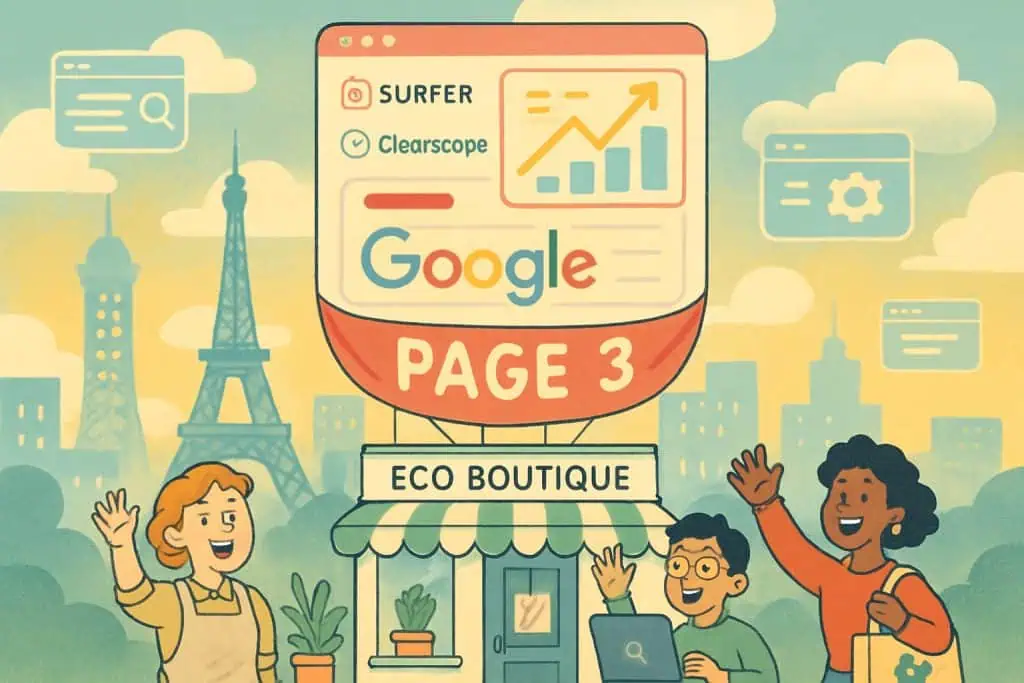
In early 2025, a sustainable fashion boutique in Paris struggled with visibility. Despite offering eco-friendly products, their website languished on page three of Google. Organic traffic was stagnant, and limited budgets meant paid ads drained resources quickly. The story is familiar among SMEs, yet it also demonstrates why emerging AI SEO trends matter.
From Struggle to Breakthrough
Within six months of adopting AI-driven SEO tools aligned with emerging AI SEO trends, the boutique’s organic traffic soared by 900%. They secured top rankings for niche long-tail queries like “ethical linen dresses near me.” By leveraging predictive keyword tools and automated on-page optimisation, they bypassed costly ad campaigns and built sustainable visibility.
This case illustrates how emerging AI SEO trends act as equalisers. Once reserved for large enterprises, AI-powered strategies now enable small businesses to forecast trends, optimise faster, and win competitive SERPs without massive marketing budgets.
Why Emerging AI SEO Trends Are Game-Changing
- Predictive Insights: Tools scan rising Search behaviour, enabling SMEs to publish before demand peaks.
- Automated Content Optimisation: Platforms streamline keyword distribution, readability, and internal linking.
- Technical Fixes at Scale: AI identifies and resolves site errors, improving crawl budgets and indexation.
Together, these pillars demonstrate that emerging AI SEO trends are practical solutions that drive measurable results.
The Broader Reality
AI in SEO is no longer a luxury; it has become a necessity. In an algorithm-driven Search ecosystem, emerging AI SEO trends help SMEs stay agile. From boutique retailers to local service providers, businesses can now anticipate shifts in user intent and adapt instantly.
The Paris fashion boutique is just one example of what’s possible. As more SMEs adopt AI-powered tools, the competitive landscape will continue to evolve. Emerging AI SEO trends offer a pathway in which resource constraints no longer dictate visibility, enabling small players to achieve impact once thought unattainable.
How AI is Redefining SEO Fundamentals?
Google’s AI Overviews, formerly called Search Generative Experience, now account for 15% of Search engine results pages (SERPs), synthesising answers from multiple sources directly atop traditional listings.
These AI-generated summaries provide concise responses to queries, reducing the need for users to click through to websites. Backlinko’s analysis shows that AI Overviews can reduce organic click-through rates by 18–64% for affected queries, prompting businesses to rethink content strategies. For SMEs, this means prioritising content that either earns a spot in these summaries or offers deeper value than AI can encapsulate.
The shift toward AI-driven SERPs requires prioritising user intent optimisation over keyword density. Google’s MUM and BERT algorithms now parse natural language with unprecedented nuance, prioritising content that addresses latent questions like “How do I style a linen dress sustainably?” over rigid keyword matches. Tools like SurferSEO and Clearscope leverage machine learning to analyse top-performing content, suggesting semantic keywords and structural adjustments to align with these intent-based algorithms.
Leveraging AI Tools for SME SEO Success
Automated Content Creation and Optimisation
AI content generators like Jasper and Copy.ai illustrate another emerging AI SEO trend. These platforms enable SMEs to scale content production at unprecedented speed. Within minutes, drafts of blog posts, product descriptions, or landing page copy are ready, and editors can then refine tone and branding.
Consider a Lyon-based bakery that produced 50 blog posts in three weeks using Jasper, targeting local Search terms such as “gluten-free croissants Paris.” The result: a 40% boost in local SEO visibility. Such outcomes reflect how emerging AI SEO trends combine automation with human oversight to maximise efficiency.
However, automation without quality control can backfire. Following Google’s 2024 Helpful Content Update, AI-driven output must meet E-E-A-T standards (Experience, Expertise, Authoritativeness, Trustworthiness). Tools like Frase and MarketMuse play a critical role here by auditing content depth, recommending citations, and aligning text with quality guidelines. This demonstrates how emerging AI SEO trends emphasise not just speed, but also sustainable trust signals.
Technical SEO and On-Page Automation
Emerging AI SEO trends extend beyond content to technical SEO. Platforms such as Alli AI can now automatically resolve broken links, fix alt text, and recommend schema markup. A Barcelona-based tour operator adopted this AI tool to address 82 technical site errors, increasing crawl efficiency by 25% and improving keyword rankings by 15%.
On-page optimisation has also been transformed. With Yoast SEO and RankMath integrating AI features, SMEs now receive real-time feedback on readability, internal linking, and keyword distribution. For instance, plugins can recommend restructuring headers to align with Search intent or suggest semantically related keywords to reinforce topical authority. These innovations confirm that emerging AI SEO trends are bridging the gap between complex technical requirements and accessible, automated solutions.
The Bigger Picture: Future-Proofing with Emerging AI SEO Trends
The true advantage lies in the holistic adoption of emerging AI SEO trends. Predictive analytics, AI content tools, and automated technical fixes together build an agile SEO ecosystem. SMEs that integrate these capabilities not only anticipate changes but also adapt in real time, protecting their visibility against algorithm updates and shifting user behaviour.
Whether by anticipating Search demand, scaling content creation responsibly, or streamlining technical upkeep, these emerging AI SEO trends are reshaping how businesses compete online. SMEs that act now can secure lasting advantages, setting themselves up for sustainable growth in increasingly competitive Search environments.
SMEs Winning with AI-Powered Strategies
Case Study 1: 10X Organic Traffic Through AI-Driven Local SEO
A Toronto-based eco-cleaning service struggled to rank beyond local competitors. By implementing an AI strategy focusing on hyper-local intent, they:
- Used BrightLocal’s AI tool to identify 30+ “near me” keywords (e.g., “non-toxic carpet cleaning downtown Toronto”).
- Generated localised service pages via Jasper and optimised them for voice Search queries.
- Leveraged ChatGPT to craft Q&A-style blog posts addressing common concerns (e.g., “Are eco cleaners safe for pets?”).
- Within four months, organic traffic grew from 200 to 2,000 monthly visitors, with a 35% conversion rate from localised pages.
Case Study 2: Predictive Analytics in Action
CMY Cubes, an Australian educational toy retailer, faced stagnant traffic despite quality content. Their AI pivot involved:
- Using Ahrefs’ predictive keyword difficulty scores to target low-competition terms like “3D puzzle geometry for teens.”
- Deploying Clearscope to optimise existing content for semantic relevance, increasing average time-on-page by 70%.
- Implementing ChatSpot (HubSpot’s AI) to automate customer query analysis, revealing untapped content opportunities.
- Result: A 300% increase in organic revenue within six months, with 40% of traffic coming from newly identified keywords.
The Future of AI in SEO: 2025 and Beyond
Voice Search and Conversational AI Optimisation
By 2025, 55% of searches will be voice-based, driven by smart speakers and mobile assistants.
SMEs must adapt by:
- Structuring content in Q&A formats (e.g., “How do I maintain a linen dress?”).
- Optimising for long-tail, conversational phrases using tools like AnswerThePublic.
- Implementing schema markup for FAQs to enhance visibility in voice Search results.
AI-Powered Personalisation at Scale
Machine learning models now enable SMEs to deliver personalised content dynamically. For instance, a user searching for “vegan leather bags” might see a Parisian retailer’s page highlighting EU sustainability certifications. In contrast, another user receives pricing in GBP with UK shipping information, all auto-adjusted via AI tools such as Dynamic Yield.
Embracing AI as an SME Competitive Advantage
The 2025 SEO industry demands agility, with AI serving as both a disruptor and an enabler.
For SMEs, success hinges on:
- Adopting predictive tools to stay ahead of trends.
- Balancing AI efficiency with human creativity to maintain E-E-A-T.
- Prioritising local and voice Search optimisation to capture hyper-targeted traffic.
As algorithms evolve, SMEs that view AI as a collaborator- not a replacement– will dominate SERPs, turning former challenges into unprecedented growth opportunities. The future belongs to businesses that ask not “What can AI do?” but “How can we make AI work for us?”
Sources
- https://explodingtopics.com/blog/future-of-seo
- https://backlinko.com/best-free-seo-tools
- https://www.quantifimedia.com/the-ultimate-guide-to-seo-in-2025-trends-and-tips
- https://ahrefs.com/blog/ai-content-optimization-tools/
- https://www.seo.com/ai/ai-seo-statistics/
- https://www.salesforce.com/marketing/ai/seo-guide/
- https://seocrawl.com/en/2025-seo-trends/
- https://searchengineland.com/seo-priorities-2025-453418
- https://explodingtopics.com/blog/ai-in-seo
- https://researchfdi.com/future-of-seo-ai/
- https://searchengineland.com/optimize-content-strategy-ai-powered-serps-llms-451776
- https://www.searchenginejournal.com/key-enterprise-seo-and-ai-trends/532337/
- https://screpy.com/predictive-analytics-and-seo-a-perfect-match/
- https://backlinko.com/ai-seo-tools
- https://searchengineland.com/adapt-seo-strategy-stronger-ai-visibility-453641
Q&A
Q1: What are the top emerging AI SEO trends for SMEs in 2025?
A1: Predictive insights to publish before demand, automated content and internal linking, and AI technical SEO that improves crawl budgets and indexation.
Q2: How do Google AI Overviews impact SEO strategy and organic traffic?
A2: They appear on roughly 15% of SERPs and can reduce CTR by 18–64%, requiring intent-first content, FAQs, and pages that earn or complement summaries.
Q3: Which AI tools best optimise content quality and E-E-A-T for SMEs?
A3: SurferSEO, Clearscope, Frase, and MarketMuse guide semantic coverage, structure, and citations aligned with Google’s Helpful Content standards.
Q4: How can small businesses capture local and voice Search with AI?
A4: Use Q&A formats, long-tail conversational keywords, BrightLocal for “near me” terms, and FAQ schema to win hyperlocal and voice-assistant results.