Summary
Metadata SEO rankings are one of the fastest, highest-ROI levers in modern search optimization, directly influencing visibility, click-through rate, and user engagement. By strategically optimizing title tags, meta descriptions, schema markup, and keywords for intent alignment, businesses can see measurable traffic gains within days. From WordPress to Shopify, consistent metadata optimization strengthens rankings, boosts CTR, and improves overall SEO performance in both desktop and mobile search results.
The $50,000 Wake-Up Call That Changed Everything
Sarah, a WordPress consultant from Denver, watched in horror as her client’s e-commerce site plummeted from page one to page three overnight. The culprit was a botched website migration that stripped away all carefully crafted meta descriptions and title tags. Within 72 hours, organic traffic dropped by 68%, and her client faced a potential $50,000 revenue loss for the quarter.
But this disaster turned out to be the best thing that ever happened to Sarah’s SEO strategy.
Because it forced her to discover the incredible power of metadata SEO rankings optimisation, within two weeks of implementing strategic metadata fixes, she not only recovered lost traffic but also increased it by 34% above pre-migration levels. Her secret? A systematic approach to metadata optimisation that any busy professional can master.
If you’re running an SME, managing e-commerce on Shopify, or juggling multiple client sites on WordPress, you know the struggle. You need results fast, but complex SEO feels overwhelming. The good news? Optimising metadata for better search engine rankings doesn’t require a computer science degree, just the right strategy.
Why Metadata SEO Rankings Are Your Secret Weapon?
Let’s cut through the noise. Metadata optimisation is your direct line to search engine algorithms and user psychology. Think of metadata as your website’s elevator pitch to both Google and potential visitors. You have seconds to make an impression, and metadata determines whether users click your link or scroll past it.
Recent studies reveal that well-optimised title tags can increase click-through rates by up to 36%, while compelling meta descriptions boost engagement by 20%. But here’s what most small business owners don’t realise: metadata optimisation offers the fastest ROI of any on-page SEO strategy. Unlike content creation or link building, which can take months to show results, metadata changes can impact your rankings within days.
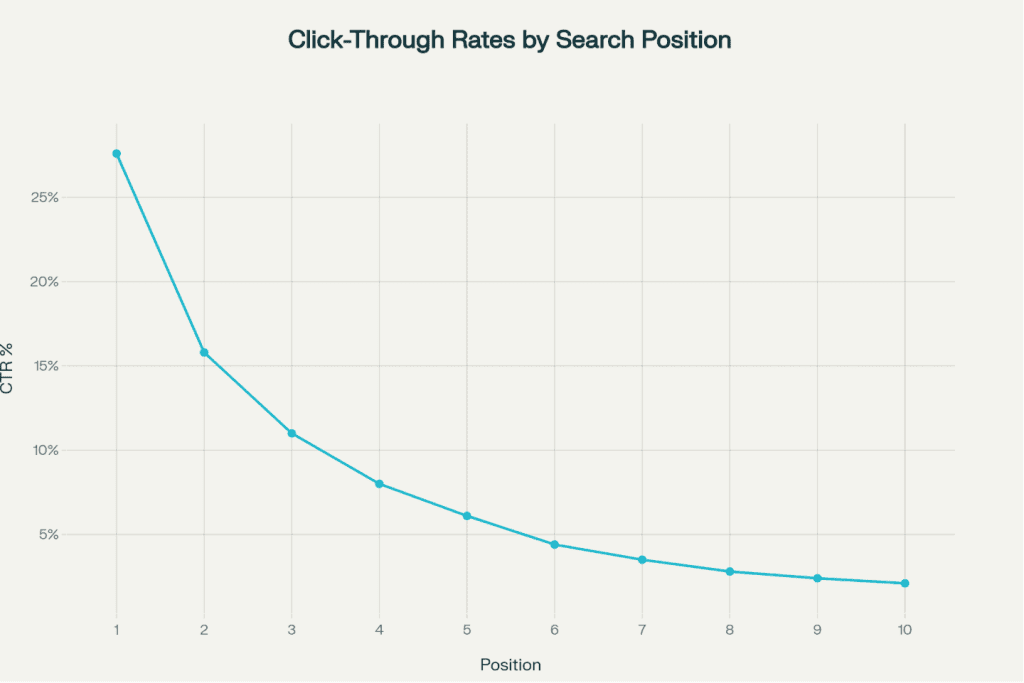
The data speaks volumes. Position one in search results captures 27.6% of all clicks, while position ten struggles with just 2.1%. This dramatic decline emphasises why metadata SEO rankings matter so much; your metadata often determines whether you land in that coveted top spot or get buried on page two.
Consider this: Google processes over 8.5 billion searches daily. Each search result displays metadata (your title tag and meta description) as the primary factors users consider when deciding. If your metadata doesn’t grab attention and clearly communicate value, you’re essentially invisible, regardless of how good your content is.
The Science Behind Metadata and Search Engine Rankings
Meta tags SEO operates on multiple levels, influencing both algorithmic ranking factors and user behaviour signals. Search engines like Google use metadata to understand your page’s topic, relevance, and quality. But the real magic happens when optimised metadata drives higher click-through rates, which Google interprets as a quality signal and can further boost your rankings.
Dr Rand Fishkin’s latest research indicates that user engagement metrics, including CTR from search results, have become increasingly important ranking factors. This creates a positive feedback loop: better metadata leads to higher CTR, which signals quality to Google and improves metadata SEO rankings.
The algorithm considers several metadata elements:
- Title tags: Primary ranking signal and user-facing headline
- Meta descriptions: CTR influencer and snippet content source
- Header tags (H1-H6): Content structure and hierarchy signals
- Alt text: Image context and accessibility compliance
- Schema markup: Enhanced search result features
But here’s where it gets interesting—Google’s 2024 algorithm updates have placed even greater emphasis on matching user intent. Your metadata must not only include relevant keywords but also align with what users actually want to accomplish. This shift toward intent-based optimisation means that keyword research for metadata has become more nuanced and critical than ever.
Quick Win #1: Master Title Tags Optimisation for Maximum Impact
Title tag optimisation is your most significant opportunity for immediate improvements in metadata SEO rankings. Your title tag serves as both a ranking factor and the clickable headline in search results. Get this right, and everything else becomes easier.
Start with the 60-character rule, but think strategically about which characters to use. Front-load your primary keyword within the first 30 characters, as search engines weight early keywords more heavily. For e-commerce businesses, this might look like: “Organic Dog Food | Premium Natural Pet Nutrition | PetStore.”
Here’s a framework that consistently drives results:
- Characters 1-30: Primary keyword and core value proposition
- Characters 31-45: Secondary benefit or modifier
- Characters 46-60: Brand name or compelling closer
Avoid common title tag mistakes that kill CTR. Generic titles like “Home Page” or “Products” waste valuable real estate. Keyword stuffing creates spammy-looking results that users avoid. Missing brand names reduce recognition and trust signals.
Recent analysis of 2 million title tags shows that titles containing numbers (e.g., “7 Quick Wins”) increase CTR by 23%. Power words such as “proven,” “ultimate,” “secret,” or “exclusive” can boost clicks by 18%. But authenticity matters; clickbait titles that don’t deliver on their promise will increase your bounce rate and ultimately affect your rankings.
For WordPress users, plugins like Yoast SEO or RankMath make title optimisation straightforward. Shopify merchants can edit title tags through their admin panel or use apps like SEO Manager for bulk optimisation. The key is consistency across your entire site; every page should have a unique, optimised title tag.
Quick Win #2: Write Meta Descriptions That Compel Clicks
Meta description best practices centre on one goal: convincing users to click your result instead of the nine others on the page. While meta descriptions don’t directly impact rankings, their influence on CTR makes them crucial to SEO success.
The optimal length of the meta description has evolved. Google now displays up to 160 characters consistently, though mobile results may show slightly less. Use this space strategically; you’re writing advertising copy, not just page summaries.
Compelling meta descriptions follow a proven formula:
- Hook (20-30 characters): Grab attention immediately
- Value proposition (60-80 characters): Clearly state the benefit
- Call-to-action (20-30 characters): Encourage the click
- Keywords (naturally integrated): Match search intent
For example: “Discover how SMEs increase traffic 300% with simple metadata fixes. Proven strategies, real case studies, actionable tips. Start optimising today!”
This description includes emotional triggers (“discover”), social proof (“300% increase”), specificity (“simple metadata fixes”), and urgency (“today”). It naturally incorporates relevant keywords without stuffing.
Industry data shows that meta descriptions including questions increase CTR by 14%. Descriptions mentioning specific benefits or outcomes perform 22% better than generic summaries. Numbers and statistics in descriptions boost credibility and clicks—users trust concrete data over vague promises.
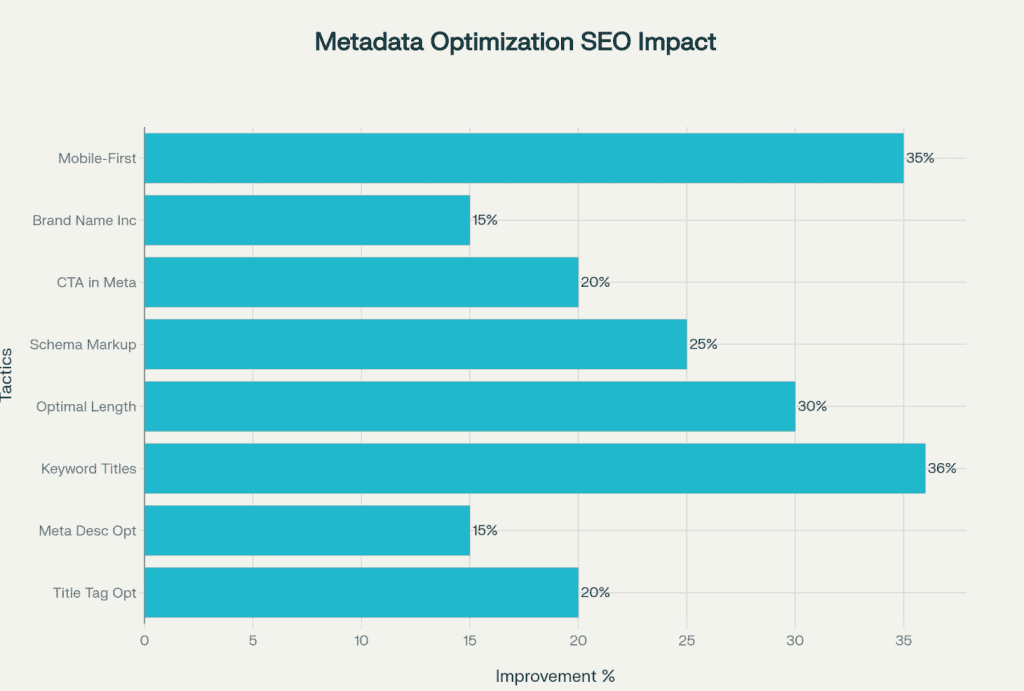
The chart above demonstrates how different metadata optimisation tactics impact performance. Meta description optimisation alone can improve CTR by 15%, but combining multiple tactics significantly amplifies results.
Quick Win #3: Leverage Strategic Keyword Research for Metadata
Keyword research for metadata requires a different approach than traditional SEO keyword targeting. You’re identifying the exact phrases your audience uses when they’re ready to click, buy, or engage.
Start with search intent analysis. Commercial queries often include modifiers like “best,” “top,” “review,” or “buy.” Informational searches typically begin with “how,” “what,” “why,” or “guide.” Your metadata should mirror this language precisely.
Tools such as SEMrush, Ahrefs, and Google Autocomplete reveal the specific phrases users type. But here’s a pro tip: analyse the metadata of current top-ranking pages for your target keywords. What language patterns do they use? How do they structure their titles and descriptions?
Long-tail keywords often provide the best metadata opportunities. While “SEO” might be too competitive, “metadata SEO rankings for small business” could be perfect for your niche. These longer phrases typically have higher intent and lower competition.
Consider local modifiers if relevant. “WordPress SEO consultant Denver” outperforms the generic “WordPress SEO” for location-based businesses. Industry-specific terms like “Shopify SEO for fashion brands” target your exact audience while reducing competition.
The key is matching keywords to user psychology. Someone searching “urgent website traffic fix” needs different metadata than someone searching “SEO basics tutorial.” Your metadata should reflect the urgency, specificity, and intent behind each target keyword.
Quick Win #4: Optimise for Mobile-First Metadata Display
Google’s mobile-first indexing means your metadata must work perfectly on smartphones. Mobile search results display differently—titles may truncate earlier, descriptions might wrap oddly, and user behaviour differs significantly from desktop.
Mobile title optimisation follows stricter rules. Aim for 50 characters or fewer to ensure full display across all devices. Front-load the most essential information because mobile users scan. “Free Shipping Organic Coffee Beans | Premium…” works better than “Premium Artisanal Organic Coffee Beans with Free Shipping to…”
Meta descriptions on mobile often display more characters vertically but fewer horizontally. Write descriptions that work in both formats. Avoid wide characters like “M” and “W”, which take more space. Test your metadata across different devices to ensure consistent presentation.
Mobile users exhibit different click patterns. They’re more likely to click results that clearly indicate immediate value or solutions. Terms such as “fast,” “instant,” “mobile-friendly,” or “on-the-go” can significantly improve mobile CTR.
Consider thumb-friendly language. Mobile users often search while multitasking, so your metadata should be scannable and immediately understandable. Bullet points or numbered benefits work well: “✓ 24hr delivery ✓ No setup fees ✓ Money-back guarantee.”
Quick Win #5: Implement Schema Markup for Enhanced Visibility
Schema markup represents the next evolution of SEO meta tags. This structured data helps search engines understand your content’s context, enabling rich snippets, star ratings, pricing information, and other enhanced search features.
For e-commerce sites, product schema can display prices, availability, and reviews directly in search results. Local businesses benefit from an organisation schema showing addresses, phone numbers, and hours. Service businesses can highlight ratings and testimonials through review schema.
Implementation doesn’t require coding expertise. WordPress plugins such as Schema Pro and Shopify apps like JSON-LD for SEO automate the process. Google’s Structured Data Markup Helper provides free guidance for manual implementation.
Start with a basic organisation schema for your business information. Add breadcrumb schema to improve navigation understanding. Implement the FAQ schema for content pages, as this often triggers featured snippet opportunities.
Test your schema implementation using Google’s Rich Results Test tool. A valid schema doesn’t guarantee rich results, but it significantly increases your chances. Even without visual enhancements, schema provides additional context that can improve metadata SEO rankings.
Platform-Specific Metadata Optimisation Strategies
WordPress Metadata Optimisation:
WordPress offers multiple metadata management options. Free plugins like Yoast SEO provide basic optimisation, while premium tools like RankMath offer advanced features like bulk editing and automatic schema generation.
Key WordPress metadata tasks:
- Install and configure an SEO plugin
- Optimise default title and description templates
- Set up automatic social media meta tags
- Enable breadcrumb schema
- Optimise media alt tags site-wide
Shopify Metadata Optimisation:
Shopify’s built-in SEO features handle basic metadata, but third-party apps significantly expand capabilities. Apps such as SEO Manager, TinyIMG, and Plug in SEO offer advanced optimisation options.
Essential Shopify metadata optimisations:
- Edit product and collection meta tags
- Optimise homepage and page titles
- Configure automatic product schema
- Set up review and rating snippets
- Implement local business schema
Both platforms benefit from consistent metadata templates. Create standardised formats for different page types, product pages, blog posts, and category pages, ensuring brand consistency while allowing for customisation.
Measuring and Improving Your Metadata Performance
Metadata SEO rankings improvement requires continuous monitoring and optimisation. Google Search Console provides essential metadata performance data, showing which pages need attention and which optimisations are working.
Key metrics to track:
- Click-through rate by page: Identifies underperforming metadata
- Impression volume: Shows ranking visibility trends
- Average position: Indicates ranking movement
- Query performance: Reveals keyword opportunity gaps
Use this data to prioritise optimisation efforts. Pages with deep impressions but low CTR need better metadata. Pages with declining average position may require adjustments to their keyword strategy.
A/B testing metadata isn’t as straightforward as testing ad copy, but you can implement systematic improvements and measure results over time. Change one element, either the title tag or the meta description, and monitor performance for 2-4 weeks before making additional modifications.
Tools such as SEMrush Position Tracking or Ahrefs Rank Tracker provide more detailed performance insights. These platforms can track specific keyword rankings and CTR changes, helping you identify which optimisations drive the best results.
Advanced Metadata Strategies for Competitive Markets
In highly competitive industries, basic metadata optimisation isn’t enough. Advanced strategies help you stand out when multiple sites compete for the exact keywords.
Emotional Trigger Integration:
Incorporate psychological triggers that drive clicks. Words like “secret,” “exclusive,” “limited,” or “insider” create urgency and curiosity. But balancing these with authenticity overselling hurts credibility.
Competitor Gap Analysis:
Identify metadata opportunities competitors miss. If top-ranking pages use generic titles, your specific, benefit-focused alternative can capture clicks. Look for emotional gaps: are competitors too corporate when users want a personal connection?
Seasonal Metadata Updates:
Regularly update metadata for seasonal relevance. Holiday-themed titles and descriptions can capture seasonal search intent. Update “2024” references to “2025” as appropriate. Fresh metadata signals active management to both users and search engines.
Industry-Specific Optimisation:
Different industries require different metadata approaches. B2B metadata often emphasises efficiency and ROI. B2C metadata might focus on emotions and benefits. Healthcare requires trust signals and credibility markers. Adjust your strategy accordingly.
Common Metadata Mistakes That Kill Rankings
Even experienced marketers make metadata mistakes that undermine metadata SEO rankings. Avoid these common pitfalls:
Duplicate Metadata Across Pages:
Every page needs unique title tags and meta descriptions. Duplicate metadata confuses search engines and wastes opportunities to target different keywords or user intents.
Keyword Stuffing:
Overloading metadata with keywords creates spammy-looking results that users avoid. Focus on natural, compelling language that naturally includes relevant keywords.
Ignoring User Intent:
Metadata that doesn’t match user intent gets ignored. Someone searching “how to” wants different metadata than someone searching “buy now.” Align your metadata with search intent.
Generic Business Information:
Don’t waste metadata space on generic company information unless it’s part of a branding strategy. Users want to know what value you provide, not just who you are.
Missing Mobile Optimisation:
Failing to optimise for mobile display can make your metadata appear broken or unprofessional on smartphones, where most searches now occur.
The Future of Metadata and AI-Driven SEO
Artificial intelligence is reshaping metadata for search engine optimisation. Google’s increasingly sophisticated understanding of user intent means metadata must be more precise and valuable than ever.
AI-powered SEO tools now assist with metadata generation, but human creativity and strategy remain crucial. AI can suggest keyword variations and check technical requirements, but understanding your audience and crafting compelling messages requires human insight.
Voice search continues growing, affecting metadata strategy. Voice queries tend to be longer and more conversational. Your metadata should accommodate these natural language patterns while maintaining traditional keyword targeting.
Google’s featured snippets and AI Overviews increasingly pull content directly from pages, making structured, informative metadata even more valuable. Well-optimised metadata increases your chances of appearing in these prominent positions.
Ready to Transform Your Metadata SEO Rankings?
Metadata SEO rankings are among the fastest ways for busy SMEs and e-commerce businesses to boost visibility. Unlike content creation or link building, improvements in metadata SEO rankings can deliver measurable results in days rather than months.
Start with these actions to improve metadata SEO rankings:
- Audit current metadata using Google Search Console to spot missed opportunities in metadata SEO rankings
- Focus on high-impression, low-CTR pages where optimised titles and descriptions can lift metadata SEO rankings quickly
- Apply consistent, keyword-relevant title tag templates across your site to strengthen metadata SEO rankings
- Craft compelling meta descriptions for your top 10 pages to drive clicks and support better metadata SEO rankings
- Add basic schema markup to business information pages to enhance metadata SEO rankings in rich results
Sarah’s results from our introduction demonstrate that her rise in metadata SEO rankings was driven by systematically applying these same strategies. Your site can achieve similar improvements if you prioritise metadata SEO rankings rather than treating them as an afterthought.
The evidence is clear: optimising for metadata SEO rankings works. The only question is when you’ll take action to secure the traffic and customers your business deserves through more substantial metadata SEO rankings.
Sources
- Advanced Web Ranking – Meta tags are important in SEO
- Pro Rank Tracker – 9 tips for using metadata effectively
- SEOWind – SEO meta tags guide
- SEOmator – Metadata optimisation
- Oncrawl – Top 5 meta tags to improve SEO
- Wincher – Ultimate on-page SEO checklist 2024
- Yalantis – Metadata management best practices
- Search Engine Land – Meta tags for SEO
- ProfileTree – Meta keywords guide
- DataGalaxy – Metadata management best practices
- Reddit – Discussion on meta tag importance in SEO
Q&A
Q1: What are metadata SEO rankings, and why do they matter?
Metadata SEO rankings refer to how well a site performs based on optimised title tags, meta descriptions, and schema, which directly affect search visibility and user click behaviour.
Q2: How can title tag optimisation improve SEO performance?
Effective title tags place primary keywords early, stay within 60 characters, and use emotional or numerical triggers to increase click-through rates by up to 36%.
Q3: What tools help automate metadata optimisation on WordPress and Shopify?
Plugins like Yoast SEO, RankMath, and Schema Pro for WordPress, and apps such as SEO Manager or JSON-LD for Shopify, streamline bulk editing, schema markup, and keyword integration.
Q4: How does Google’s algorithm use metadata to influence search rankings?
Google analyses metadata to interpret page relevance and user intent, rewarding optimised metadata that drives higher CTRs with improved ranking positions.