Summary
Predictive SEO audits powered by AI assistants replace slow monthly checks with real-time analytics and machine learning that forecast issues, automate technical SEO, and cut audit time from days to hours while raising accuracy to ~95% and lowering costs. Platforms integrate Google Analytics, Search Console, log analysis, and rank tracking to monitor 130+ technical SEO parameters, optimize Core Web Vitals, reduce crawl budget waste, and surface actionable insights through KPI dashboards and alerts. SMEs and agencies gain scalable ROI through faster remediation, 20–30% organic traffic growth, 15–25% conversion lifts, and continuous optimization workflows that link audits, conversational querying, and CMS guidance.
Predictive SEO audits powered by AI assistants are transforming how businesses optimise their websites, moving from reactive monthly checks to proactive, real-time optimisation systems. These tools combine machine learning algorithms with conversational interfaces to identify potential SEO issues before they impact rankings, provide instant recommendations, and enable continuous optimisation, which is especially valuable for resource-constrained SMEs and agencies managing multiple clients.
The Evolution from Traditional to Predictive SEO Audits
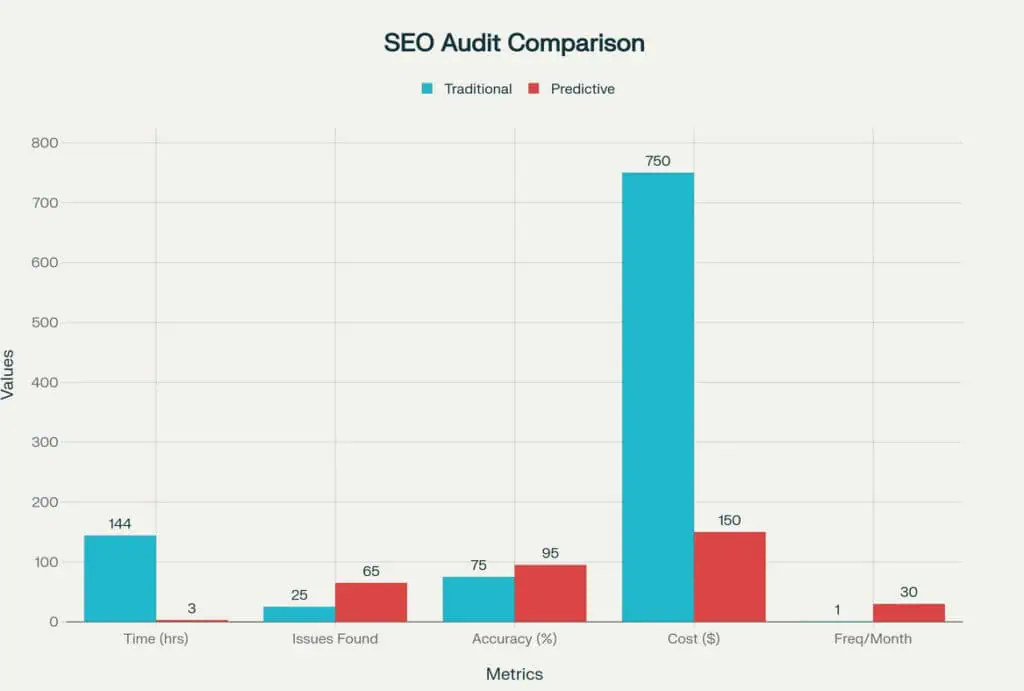
The shift from traditional to predictive SEO audits represents a fundamental change in how businesses approach website optimisation. Traditional SEO audits typically required 5-7 days to complete, identified 20-30 issues per review, and operated on monthly cycles that often missed critical problems until significant damage occurred. These manual processes were time-intensive and error-prone, with accuracy rates around 75%.
Predictive SEO audits with AI assistants have revolutionised the landscape by reducing audit completion time to 2-4 hours and identifying 50-80 issues per analysis. The accuracy rate has improved to 95%, and costs have dropped from $500-1000 per traditional audit to $100-200 for AI-powered alternatives. Most importantly, these systems operate in real-time, enabling daily or continuous monitoring instead of monthly snapshots.
The technological foundation of predictive SEO audits relies on machine learning algorithms that analyse historical website data, search engine behaviour patterns, and competitor movements to forecast potential issues. These systems excel at pattern recognition, identifying subtle correlations that human auditors might miss, such as the link between Core Web Vitals degradation and future ranking drops.
AI-powered crawlers can process large amounts of data simultaneously, analysing over 130 technical SEO parameters, including HTTPS implementation, mobile usability, structured data validation, and crawl budget optimisation. This analysis enables businesses to address technical issues before they impact search visibility or user experience.
How AI Assistants Transform Technical SEO Analysis
AI assistants have become integral to modern SEO workflows by serving as intermediaries between complex data and actionable insights. These conversational interfaces process natural language queries about website performance, making technical SEO data accessible to non-technical stakeholders. For example, users can ask questions like “Which pages are losing rankings this week?” or “What technical issues need immediate attention?” and receive instant, contextualised responses.
Integrating AI assistants with SEO audit tools enables automated log file analysis at scale. Tools like Botify’s LogAnalyzer can segment crawl data by site sections, identifying crawl budget waste that traditional analysis would miss. These systems have shown their value through case studies reporting 40% reductions in crawl budget waste, leading to improved indexation for content-heavy sites.
Natural Language Processing (NLP) enables AI assistants to understand the context of technical issues. The system can identify not just what’s broken but also how technical issues might affect content relevance and user experience. For example, if slow loading times correlate with high bounce rates on specific landing pages, the AI assistant can recommend both technical optimisations and content adjustments.
Advanced AI assistants excel at performance diagnostics, automatically identifying Core Web Vitals issues, image optimisation opportunities, and code inefficiencies. Some tools can preload critical resources based on predicted user behaviour, reducing Largest Contentful Paint (LCP) by up to 30%. This predictive approach to performance optimisation ensures websites maintain optimal speed before users encounter issues.
Real-Time Analytics: The Foundation of Predictive SEO
Real-time analytics is the backbone of effective predictive SEO audits, providing immediate visibility into ranking changes, traffic fluctuations, and technical issues. Unlike traditional reporting cycles that could leave businesses unaware of problems for weeks, real-time monitoring enables instant detection and response to SEO challenges.
Modern SEO platforms integrate data from multiple sources, including Google Analytics, Google Search Console, rank-tracking tools, and first-party data, to create comprehensive performance dashboards. This integration ensures predictive models have access to complete datasets for accurate forecasting and anomaly detection.
The power of real-time analytics is especially clear during algorithm updates or technical incidents. Organisations using real-time dashboards can adapt five times faster than those relying on weekly or monthly reports. This speed often determines whether traffic losses are temporary setbacks or permanent damage to organic visibility.
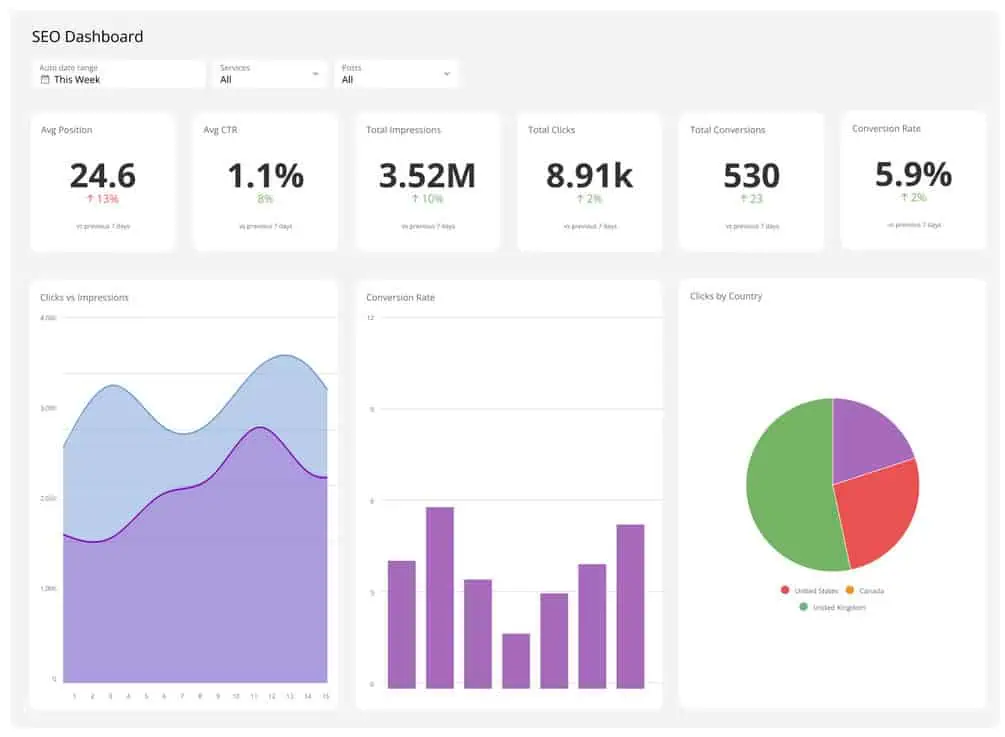
Real-time SEO tracking includes essential metrics such as organic traffic patterns, keyword ranking volatility, click-through rates, Core Web Vitals performance, and crawl statistics. These metrics provide early warning signals for potential issues, enabling intervention before problems escalate. For example, sudden drops in click-through rates might indicate SERP feature changes that require immediate content optimisation.
Predictive analytics in real-time systems can forecast traffic trends, identify seasonal optimisation opportunities, and predict the impact of technical changes before implementation. This foresight enables businesses to make data-driven decisions about resource allocation and optimisation priorities.
KPI Dashboards: Making Predictive Data Actionable
KPI dashboards serve as the command centre for predictive SEO operations, transforming complex datasets into actionable insights that drive strategic decisions. Effective SEO dashboards prioritise 5-7 essential metrics instead of overwhelming users with excessive data points. This focused approach ensures stakeholders can quickly identify trends, detect anomalies, and respond to opportunities without information overload.
The most critical SEO KPIs for predictive analysis include organic traffic growth rates, keyword ranking distributions, organic conversion rate, Core Web Vitals scores, and crawl budget utilisation. These metrics provide both immediate performance indicators and predictive signals for future optimisation needs.
Advanced dashboards incorporate automated alert systems that notify teams when metrics deviate from expected ranges. For example, if organic traffic drops by more than 15% within 24 hours or Core Web Vitals scores fall below acceptable thresholds, stakeholders receive immediate notifications, enabling a rapid response.

Visualising predictive insights through interactive charts, trend lines, and forecasting models helps teams understand current performance and anticipated changes.
This forward-looking perspective enables proactive optimisation strategies rather than reactive firefighting.
Cross-platform integration enables dashboards to combine SEO data with business metrics, including revenue, conversion rates, and customer lifetime value. This integration proves SEO’s direct impact on business outcomes, justifying optimisation investments and guiding strategic resource allocation.
SME Implementation: Making Advanced SEO Accessible
Small and medium-sized enterprises across Africa and globally face unique challenges when implementing predictive SEO audits, mainly due to resource constraints and limited technical expertise. However, AI assistants have democratized access to advanced SEO capabilities by simplifying processes and reducing implementation costs.
Cloud-based predictive SEO platforms offer advantages for SMEs, providing enterprise-grade functionality without significant infrastructure investments. These solutions typically operate on subscription models starting at $19-$99 per month, making advanced SEO tools accessible to businesses with limited budgets.
The key to successful SME implementation is selecting platforms that balance sophistication with usability. Tools like SEOptimer, SE Ranking, and Semrush offer tiered pricing structures that let small businesses access core predictive features while scaling functionality as they grow.
African SMEs benefit from predictive SEO audits given infrastructure challenges and limited digital marketing expertise. Real-time monitoring helps businesses maintain website performance despite connectivity issues, while AI assistants provide guidance that would otherwise require expensive consultant services.
Training and support are critical for SME adoption. Platforms that offer comprehensive documentation, video tutorials, and responsive customer support enable small business teams to use predictive capabilities effectively without extensive technical backgrounds.
Integration Workflows: Connecting Audits with AI Assistants
Integrating predictive SEO audits with AI assistants creates seamless workflows that automate routine tasks and provide intelligent guidance for complex decisions. These systems typically connect through APIs that enable real-time data sharing between audit tools and conversational interfaces.
Modern integration workflows begin with automated site crawling and analysis, where AI systems continuously monitor website health and performance metrics. When issues are detected, AI assistants can notify relevant team members through Slack, email, or dashboard alerts, providing context and recommended actions.
The most sophisticated implementations enable conversational querying of SEO data, allowing users to ask natural-language questions about website performance and receive detailed, contextual responses. For example, a user might ask, “Show me pages with declining rankings this month,” and receive a comprehensive analysis with potential causes and optimisation recommendations.
Automated reporting ensures stakeholders receive regular updates without manual intervention. AI assistants can generate weekly performance summaries, highlight emerging issues, and provide strategic recommendations based on trend analysis and competitive intelligence.
Integration with content management systems enables AI assistants to suggest optimisation opportunities during content creation and editing. This proactive approach ensures SEO best practices are embedded in workflows rather than addressed later.
Measuring Success: ROI of Predictive SEO Audits
Measuring the return on investment of predictive SEO audits requires tracking both immediate operational benefits and long-term strategic outcomes. Organisations that implement predictive SEO audits typically see immediate improvements in audit efficiency, with time savings of 70–80% compared to traditional manual processes.
The financial impact extends beyond labour cost savings to include improved revenue through better search visibility and faster issue resolution. Case studies show that businesses using predictive SEO audits achieve 20–30% growth in organic traffic and 15–25% increases in organic conversion rates.
Predictive SEO audits help businesses avoid costly ranking losses by identifying and addressing issues before they affect search performance. The ability to forecast algorithmic impacts and optimise content in advance provides competitive advantages that directly translate into revenue protection and growth opportunities.
Long-term ROI includes improved team productivity, fewer emergency fixes, and stronger strategic decision-making. Organisations report that predictive SEO audits enable more effective resource allocation and investment planning, leading to sustainable competitive advantages in search visibility.
Finally, integrating AI assistants further amplifies ROI by democratizing access to SEO expertise and reducing dependency on external consultants. This is especially valuable for SMEs and agencies managing multiple clients, where the cost of expert-level analysis across many projects would otherwise be prohibitive, making predictive SEO audits a cornerstone of scalable, future-proof digital strategy.
Sources
Using AI Automation to Streamline Technical SEO Audits for Businesses, CaptivateClick, 2025-06-15 – https://captivateclick.com/blog/using-ai-automation-for-technical-seo-audits
AI Analytics Dashboard: Real-Time SEO & Marketing Performance Tracking, Passionfruitous, 2025-09-11 – https://www.getpassionfruit.com/blog/what-is-ai-search-and-how-it-s-reshaping-seo
The Future of SEO Audits: How AI and Machine Learning Are Changing the Game, Ranklytics, 2024-12-06 – https://ranklytics.ai/the-future-of-seo-audits-how-ai-and-machine-learning-are-changing-the-game/
SEO KPI Dashboard Examples: Proven Trends & Tips for 2025, Reportz, 2025-08-24 – https://reportz.io/seo/seo-kpi-dashboard-examples-2025/
Real-Time SEO KPI Tracking: 10 Essential Metrics For Success, CapstonAI, 2025-08-26 – https://capston.ai/real-time-seo-kpi-tracking/
Small Business SEO Audits, Words on the Rise, 2024-03-31 – https://wordsontherise.com/small-business-seo-audits/
Predictive Analytics and SE:O A Perfect Match, Screpy, 2024-05-12 – https://screpy.com/predictive-analytics-and-seo-a-perfect-match/
What Are SEO KPIs? +7 SEO Metrics to Track, SEO.com, 2025-07-10 – https://www.seo.com/basics/analytics/kpis/
10 Important SEO KPIs You Should Be Tracking, Shopify, 2023-11-17 – https://www.shopify.com/za/blog/seo-kpis
Digital Strategies & AI Tools for SMEs 2024, Ola Branding, 2024-10-30 – https://olabranding.com/ai-and-digital-tools-empower-mexican-smes-growth/
Top SEO KPIs to Track Your SEO Performance in 2025, Softtrix, 2025-09-09 – https://www.softtrix.com/blog/top-seo-kpis-to-track-you-seo-performance/
Real-Time Content Reporting Dashboards for Headless CMS Workflows, Business Link, 2025-05-25 – https://businesslink.co.za/real-time-content-reporting-dashboards-for-headless-cms-workflows/digital-marketing/
20+ Best SEO Software & Tools for Small Businesses, SEOptimer, 2021-04-27 – https://www.seoptimer.com/blog/best-seo-software-for-small-business/
Use SEO API and AI to build powerful automations, SE Ranking, 2025-06-15 – https://seranking.com/blog/seo-api-automations/
10 Free Digital Tools Every African SME Should Use Today, NOFCAS Blog, 2025-09-11 – https://www.blog.nofcas.com/free-digital-tools-african-smes/
I Tried 10 AI SEO Tools (Paid & Free). Here’s What WorksSelf-Made Millennials, 2025-08-11 – https://selfmademillennials.com/ai-seo-tools/
Dashboards That Drive Decisions: Real-Time KPIs for Global SME Growth, MSME Strategy, 2025-08-11 – https://global.msmestrategy.com/dashboards-that-drive-decisions-real-time-kpis-for-global-sme-growth/
Writesonic – AI Search Visibility Tracking & Optimization Platform, Writesonic, 2024-12-31 – https://writesonic.com
SEO.AI: The #1 AI SEO tool for AI Writing, SEO.AI, 2024-12-31 – https://seo.ai
Q&A
Q1. What are predictive SEO audits with AI assistants, and why do they matter?
They use machine learning and real-time monitoring to predict technical and content issues before rankings decline, enabling continuous optimisation and reducing audit costs.
Q2. Which technical SEO metrics do predictive systems track for impact on rankings?
They analyse 130+ parameters, including HTTPS, mobile usability, structured data, crawl budget, and Core Web Vitals, to prevent indexing and speed-related losses.
Q3. How do KPI dashboards make predictive SEO data actionable for teams?
They focus on 5–7 core KPIs, trigger automated alerts for anomalies, and link SEO signals to revenue and conversions to enable faster decisions.
Q4. What ROI can SMEs expect from predictive SEO audits and AI-driven workflows?
Typical results include 70–80% time savings on audits, 20–30% organic traffic growth, 15–25% higher conversions, and reduced emergency fixes through early detection.