
Intro
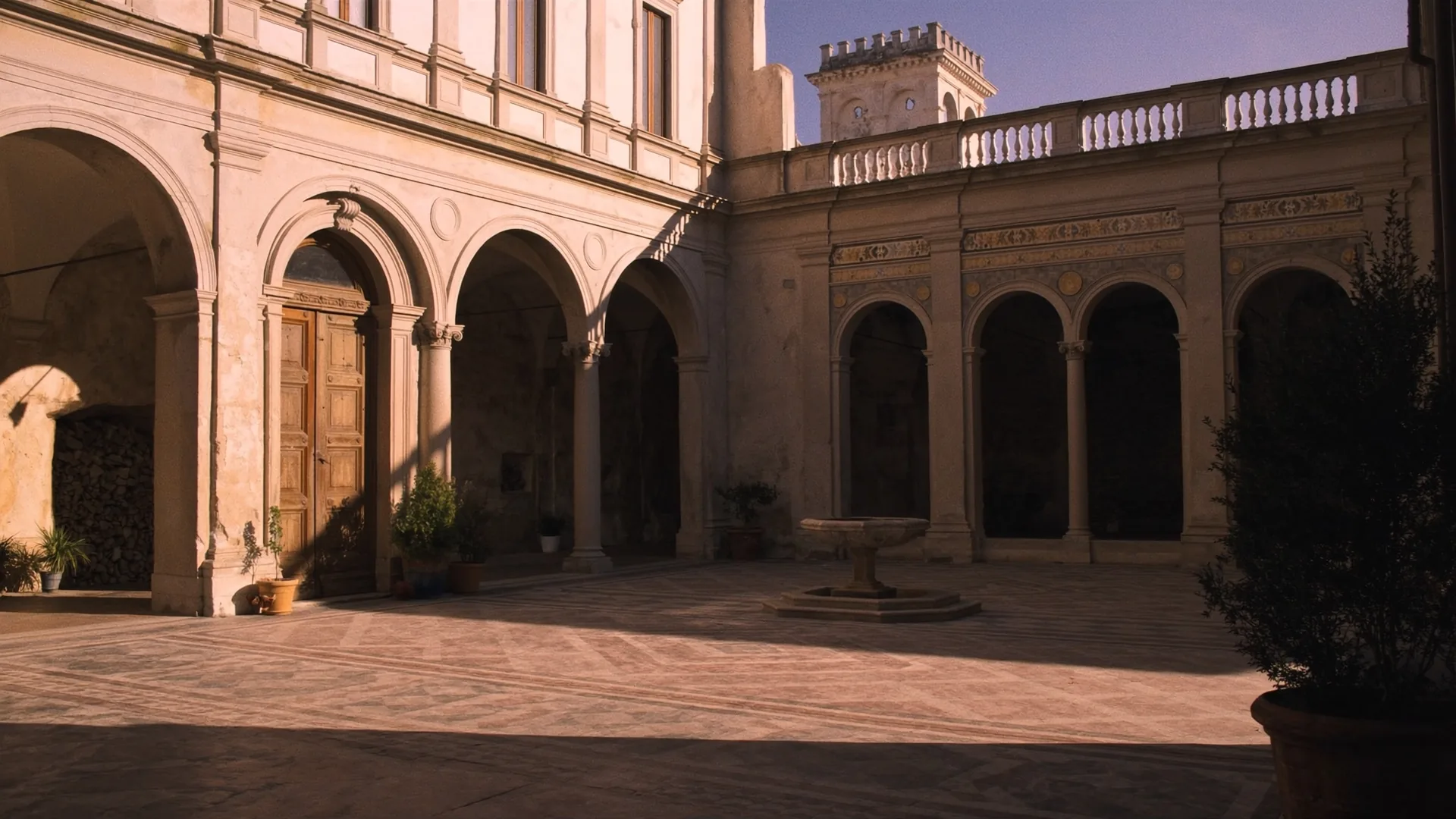
Heritage and historic hotels have something most hospitality properties do not: a story that cannot be replicated. A restored palazzo, a converted monastery, a colonial-era trading house — each carries a provenance that is genuinely unique. That uniqueness should be an advantage in AI visibility. It is often the opposite.
The problem is structural. AI engines value factual, verifiable, structured information. A heritage hotel’s greatest asset — its story — is typically presented as editorial narrative: lyrical descriptions of centuries-old stonework, atmospheric references to the building’s past lives, evocative photography. This content is compelling to human readers and largely invisible to AI engines. The engine cannot extract a citable fact from “where history whispers through every corridor.” It can extract a fact from “built in 1742, restored in 2019, Grade II listed, 45 rooms across three interconnected buildings.”
Heritage hotels also face a classification challenge in AI answers. When a traveler asks “best hotel in Florence for a cultural trip,” the engine must decide what kind of property to recommend. Heritage hotels compete not just with other heritage properties but with modern luxury hotels, boutique design hotels, and well-reviewed midscale options. The heritage angle only becomes an advantage if the engine can identify, verify, and articulate it. Without structured evidence, the heritage story stays locked inside the editorial copy, invisible to the algorithm that assembles the answer.
This case study follows the Capston Core methodology applied to a fictional heritage hotel, illustrating how structured evidence turns provenance into a measurable AI visibility advantage.
Audit your heritage property’s AI visibility
What makes heritage hotels different for AI visibility
Heritage hotels sit at the intersection of hospitality and cultural tourism, and that intersection creates a distinctive AI visibility profile.
The question space is narrative-rich. Travelers considering a heritage hotel are not just asking “where to stay.” They are asking “which hotel in Lisbon has the most interesting history,” “can I stay in a real palazzo in Italy,” “historic hotels near the old town that feel authentic.” These prompts require the engine to understand what “historic” and “authentic” mean in concrete, verifiable terms — not as marketing adjectives, but as factual attributes backed by evidence.
The competitive dynamic is also unusual. Heritage hotels rarely compete on amenity count or room technology. They compete on story, atmosphere, and cultural connection. But AI engines cannot rank stories — they can rank facts. The hotel with the most structured, verifiable heritage evidence gets the citation. The hotel with the most beautiful prose gets nothing from the engine, however much it deserves.
Listed building status, restoration history, architectural period, original use, notable historical events, and cultural designations are all factual attributes that AI engines can work with — if they are presented in structured form. Most heritage hotels treat these as background context buried in an “about” page. The Capston Core methodology treats them as primary evidence assets.
A third characteristic is the relationship between the property and its destination. Heritage hotels are often inseparable from their city’s cultural identity. A restored riad in Marrakech, a converted warehouse in Porto, a Georgian townhouse in Bath — each is both a hotel and a cultural artifact. AI engines increasingly answer destination-level cultural questions (“what makes Seville worth visiting,” “what is the best way to experience Venetian architecture”) and heritage hotels that have structured their cultural evidence can appear in these answers alongside museums, landmarks, and neighborhoods.
Common AI visibility challenges for heritage hotels
The most frequent baseline finding for heritage properties is “narrative richness, evidence poverty.” The hotel has invested heavily in editorial storytelling — and it shows. The website reads beautifully. But when the Capston Core team tests the prompt set, the engine cannot find the facts it needs to cite the hotel.
This manifests in a specific way: the hotel appears in AI answers about its destination but is described generically. The engine might say “there are several historic hotels in the area,” without naming the property, because it lacks the structured evidence to distinguish one heritage hotel from another. The story that makes the hotel unique to a human reader is not accessible to the engine in a form it can use.
A second common challenge is what the methodology calls “era ambiguity.” AI engines sometimes misattribute the building’s period, confuse the original construction date with the restoration date, or describe the architectural style incorrectly. This happens when the hotel’s own content uses impressionistic language — “centuries of history” — rather than specific, citable facts. Third-party sources may carry outdated or incorrect information, and without a structured authoritative source on the hotel’s own domain, the engine defaults to whatever it finds.
A third pattern is the preservation angle as a missed evidence layer. Many heritage hotels have invested significantly in restoration and preservation — working with heritage authorities, using traditional materials and techniques, maintaining historical features. This is compelling content for culturally motivated travelers, and it is exactly the kind of factual, verifiable evidence that AI engines can cite. But it is almost never structured as such. The restoration story lives in a press release from the opening year, not in a maintained, schema-marked evidence page on the hotel’s domain.
Heritage hotels also face a “modern comfort” perception gap in AI answers. Travelers asking comparative questions — “historic hotel vs modern hotel which is better” — sometimes receive answers that associate heritage properties with outdated facilities. If the hotel has not published structured evidence about its contemporary amenities (climate control, connectivity, accessibility, bathroom standards), the engine defaults to an assumption that historic means less comfortable.
The Capston Core approach for heritage hotels
The Capston Core methodology for heritage hotels treats the building’s history not as background but as the primary evidence asset. The approach structures provenance into machine-readable facts that AI engines can cite with confidence.
The first step is the heritage evidence layer. The team documents the building’s factual timeline in structured form: original construction date, architectural period and style, original function, key historical events, ownership lineage (where publicly known), listed or protected status with issuing authority, restoration timeline, restoration methodology (traditional materials, heritage-approved techniques), and current cultural designations. Each of these becomes a structured data point on the hotel’s domain, marked with appropriate schema (LandmarkOrHistoricalBuilding, LodgingBusiness) and presented in a format AI engines can extract.
The second step is the cultural context layer. Heritage hotels exist within a destination’s cultural narrative, and the Capston Core methodology maps the connections between the property and its cultural surroundings. This means building structured content about the neighborhood’s heritage significance, the walking routes to cultural landmarks, the museum and gallery access, and the culinary traditions the hotel’s dining reflects. The goal is to position the hotel as a citable node within the destination’s cultural network — so that AI engines answering destination-level cultural questions can include the hotel as a specific, evidence-backed recommendation.
The third step addresses the modern comfort gap. The team builds evidence containers for every contemporary amenity and service: room technology, bathroom standards, accessibility features, climate systems, connectivity infrastructure, and wellness facilities. These are not promotional claims — they are factual, verifiable descriptions that counterbalance the “historic means outdated” assumption. The evidence sits alongside the heritage facts, giving the engine a complete picture: authentic heritage, contemporary standards.
Case study: The Palazzo Collection
Property profile:
– Type: Heritage boutique hotel in a restored 18th-century palazzo
– Rooms: 45 (individually designed, no two rooms identical)
– Market: Southern European city, cultural tourism, source markets include Northern European couples, North American cultural travelers, and domestic weekend visitors
– Challenge: Strong brand reputation in traditional travel media but absent from AI answers for cultural tourism and heritage accommodation queries
Baseline findings:
The Capston Core baseline assessed The Palazzo Collection across 120 prompts spanning cultural tourism, heritage accommodation, destination discovery, and comparative queries, tested on four AI engines in English, Italian, French, and German.
The findings revealed a pattern the methodology describes as “invisible heritage.” The property had received extensive editorial coverage — features in respected travel publications, inclusion in curated heritage hotel guides, recognition from architectural preservation organizations. This coverage meant that AI engines “knew” about the property in a general sense. But when asked specific questions — “best historic hotel in [city] with original frescoes,” “where to stay to experience 18th-century architecture in [region]” — the engines could not assemble a specific, citable answer from the property’s own content.
The hotel’s website was built around atmosphere. Full-screen photography, lyrical descriptions, a single “history” page with three paragraphs of narrative. The construction date, the architectural period, the restoration details, the listed status, the fresco inventory, the courtyard dimensions — none of this was structured or schema-marked. The engine had no factual scaffolding to hang a citation on.
On comparative prompts — “historic palazzo hotel vs modern luxury hotel” — The Palazzo Collection was absent, while a competitor heritage property in the same city appeared consistently. Investigation revealed the competitor had published a detailed, structured heritage page with dates, architectural terminology, restoration timeline, and LandmarkOrHistoricalBuilding schema. That property gave the engine what it needed. The Palazzo Collection gave it beauty without facts.
Actions taken:
The Capston Core team built a heritage evidence architecture for The Palazzo Collection, working in close coordination with the property’s historian and the restoration architect who had led the 2017-2019 renovation.
The “history” page was replaced with a structured heritage section comprising four interconnected pages: a building timeline (1742 founding, subsequent owners, historical events, 2017 restoration decision, 2019 reopening), an architectural inventory (frescoed ceilings by room with period attribution, original stone staircases, courtyard colonnade, chapel conversion), a restoration methodology page (heritage authority approval process, traditional lime plaster techniques, reclaimed terracotta sourcing), and a cultural context page linking the palazzo to the city’s broader architectural heritage.
Each page carried schema markup — LandmarkOrHistoricalBuilding for the building itself, LodgingBusiness for the hotel operation, ImageObject for the architectural photography with detailed alt text and description. The existing editorial content was not removed; it was layered with a structured evidence foundation beneath it.
The team simultaneously built evidence containers for the hotel’s contemporary amenities — room-by-room climate control, modern bathroom specifications, accessibility adaptations within heritage constraints, and WiFi infrastructure — ensuring the engine had the complete picture when answering comparative queries.
Observed patterns:
The changes followed the pattern the methodology predicts for heritage properties: slow initial movement on destination-level queries, faster movement on property-specific and comparative queries.
Within the first measurement cycle, The Palazzo Collection began appearing in AI answers for heritage-specific prompts: “best historic hotel in [city],” “where to stay in a real palazzo.” The answers cited the building’s 1742 construction date, mentioned the restored frescoes, and linked to the hotel’s heritage section. The factual precision of the answers was notably higher than before — engines were citing specific, structured facts rather than vague descriptions.
On comparative prompts, the property’s position improved measurably. In the “historic vs modern” question, engines began including The Palazzo Collection as a named recommendation, using the evidence containers to describe both the heritage character and the contemporary comfort standards. The “historic means outdated” assumption was countered by the structured amenity evidence.
The cultural context layer produced an unexpected benefit: The Palazzo Collection began appearing in destination-level answers — “what makes [city] worth visiting for architecture lovers” — as a named accommodation option alongside museums and landmarks. The structured connection between the property and the destination’s cultural narrative gave engines a reason to include it in answers that went beyond accommodation queries.
Key takeaways:
– Heritage hotels have the strongest differentiation story in hospitality but the weakest evidence structure for AI engines
– Editorial narrative and atmospheric photography are invisible to AI engines without a structured evidence layer beneath them
– Building timeline, architectural inventory, restoration methodology, and cultural designations are primary evidence assets
– The modern comfort evidence layer is essential to counter the “historic means outdated” assumption in comparative answers
– Heritage properties can appear in destination-level cultural answers, not just accommodation queries, when cultural context is structured
When to start
Heritage hotels rarely face the sharp seasonality of beachfront resorts, but cultural tourism has its own rhythms. European heritage properties see peak demand around shoulder seasons — spring and autumn — when cultural travelers prefer mild weather and fewer crowds. Starting the Capston Core process six months before the primary cultural tourism season ensures the evidence layer is crawled and indexed before the demand window opens.
For heritage properties undergoing or recently completing restoration, the timing is immediate. The restoration story is the most valuable evidence asset a heritage hotel can structure for AI visibility, and it should be published in machine-readable form as soon as the property is ready to present it. The Capston Core early access program — applications open — provides the baseline assessment that reveals exactly where the heritage story is visible and where it is not.
