
Intro
AI visibility is not one problem. It is a different problem for every property type.
A 15-tent eco-lodge faces a credibility-versus-domain-authority gap. A 200-room airport hotel faces a proximity-fact extraction gap. A ski resort faces a seasonal classification gap. An aparthotel faces a category ambiguity gap. Each requires a distinct prompt set, a distinct competitor lock, a distinct content architecture, and a distinct timeline.
The Capston Core methodology is the same across all property types. The scoring grid is the same. The evidence standards are the same. But the application — the prompt taxonomy, the source-of-truth priorities, the editorial outreach angles, the schema choices — varies substantially by segment.
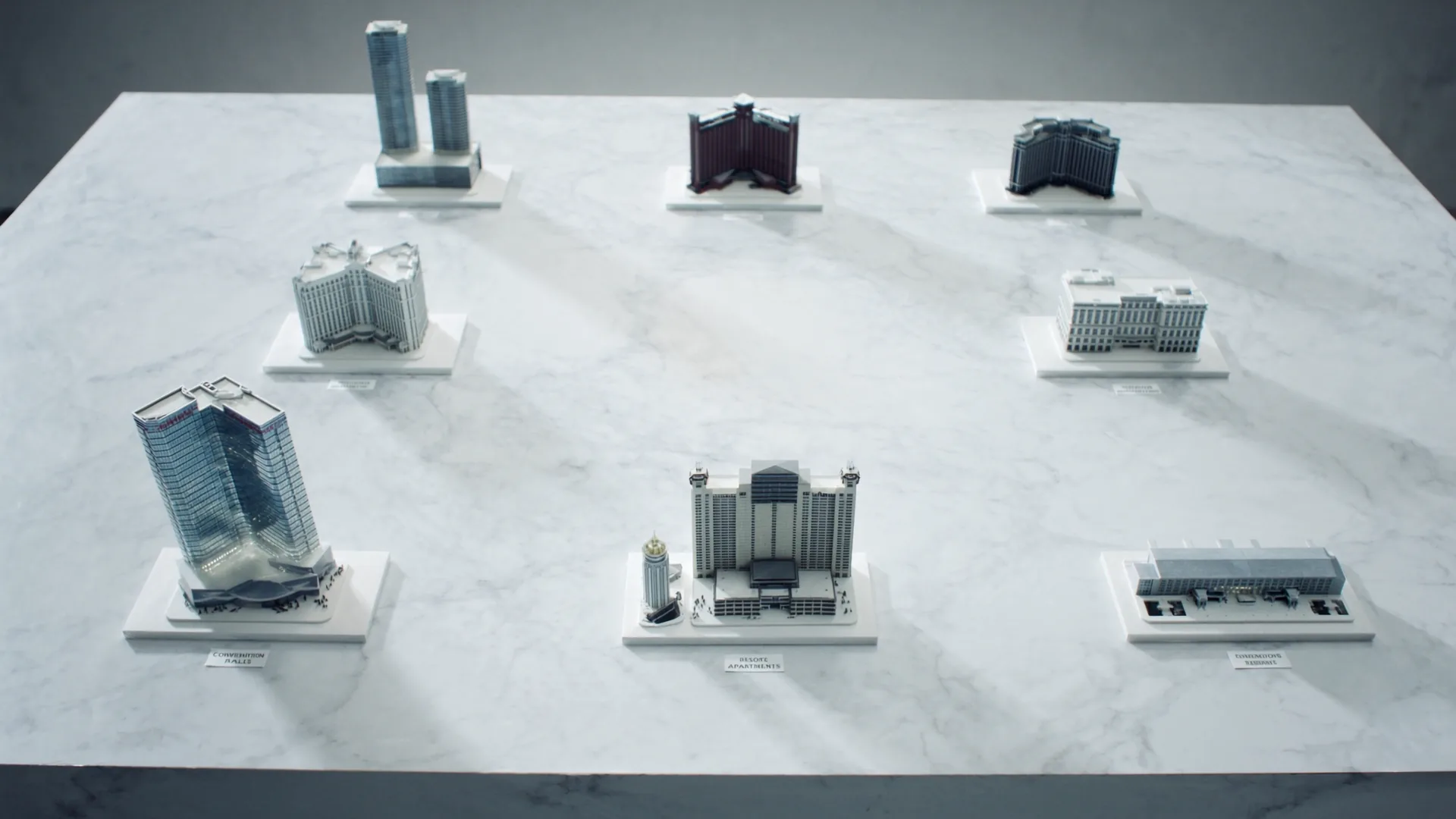
This page collects all ten property-type case studies in the Capston Core silo. Each one describes the segment-specific AI visibility challenge, applies the methodology, and presents a fictional mini-case showing the baseline, the remediation work, and the retest outcomes. Start with the property type closest to yours.
Run your property’s AI visibility baseline
The ten property-type case studies
Luxury Beachfront Resort
How a five-star beachfront resort reclaims AI answer visibility from OTAs and positions itself as a direct-booking destination in generative search. Focus on experience inventory structuring, environmental credentials, cross-language coverage for international guest markets, and seasonal demand management.
Urban Business Hotel
How an urban business hotel builds AI visibility for MICE, corporate travel, and weekend leisure segments — reducing reliance on OTA rate parity. Focus on multi-segment prompt architecture, meeting-space structuring, and the dual positioning between business and leisure.
Heritage & Historic Hotel
How a restored historic property structures its unique story for AI engines, turning heritage into citable evidence. Focus on named-entity attribution for architects, periods, and conservation details — material that AI engines can extract and cite when structured as facts rather than atmosphere.
Boutique Design Hotel
How an architect-designed boutique property builds AI visibility in a segment where visual storytelling alone is invisible to generative engines. Focus on named-entity structuring for architects, designers, and curators — and on separating lifestyle editorial signal from OTA commodity descriptions.
All-Inclusive Resort
How a multi-segment all-inclusive resort structures its F&B, family, and adult offerings for AI engines, reclaiming visibility from OTA comparison pages. Focus on programme-level content architecture, dining inventory structuring, and the segment-specific prompts that drive all-inclusive consideration.
Wellness & Spa Resort
How wellness properties earn AI citations for retreat programmes, longevity travel, and medical-adjacent queries. Focus on programme-depth extraction, clinical credential structuring, and the dual-category prompt architecture spanning leisure and health.
Mountain & Ski Hotel
How alpine properties manage AI visibility across winter and summer seasons, ski-in/ski-out positioning, and the content architecture needed to avoid seasonal misclassification. Focus on dual-season prompt taxonomy, ski-infrastructure structuring, and calendar-driven engagement timing.
Eco-Lodge & Glamping
How low-inventory, sustainability-certified properties earn AI citations against competitors with larger digital footprints. Focus on sustainability evidence structuring, certification-body citation paths, and experience-first content architecture for properties with fewer than 20 units.
Aparthotel & Serviced Residences
How hybrid-category properties earn AI visibility across corporate relocation, digital-nomad, family, and leisure segments. Focus on classification correction, segment-specific page architecture, functional-differentiator structuring, and multi-platform competitive analysis.
Airport & Transit Hotel
How proximity-dependent properties earn AI citations for layover stays, micro-stay queries, and time-sensitive booking prompts. Focus on proximity-fact extraction, terminal-specific content architecture, micro-stay structuring, and direct-booking defence in urgency contexts.
Why property type matters for AI visibility
AI engines do not treat all hotels the same. The sources they draw from, the prompt patterns travellers use, and the competitive dynamics they surface all vary by property type. A few structural reasons:
Different prompt taxonomies. A wellness traveller asks about programmes and practitioners. A ski traveller asks about lift proximity and snow conditions. An event planner asks about capacity and AV specifications. Each generates a distinct set of queries that AI engines answer from different source pools.
Different competitor sets. A boutique hotel in a city centre competes with other independents and with OTA aggregators. An eco-lodge competes with other certified properties and with greenwashed alternatives. An airport hotel competes with other terminal-connected properties and with the airline’s own disruption accommodation list. The competitor lock must reflect these differences.
Different source-of-truth priorities. A heritage hotel needs to structure its architectural story. A wellness resort needs to structure its clinical credentials. An aparthotel needs to structure its kitchen specifications. The content architecture that earns citations is segment-specific.
Different timelines. A ski hotel needs its AI visibility structured three months before the winter booking window. An airport hotel operates year-round with no seasonal peak. An eco-lodge may have a certification renewal cycle that creates content windows. The engagement timing follows the property’s calendar.
The Capston Core hospitality scorecard provides the measurement grid. The case studies above show how that grid is applied to each property type.
What all property types share
Despite the differences, every property-type engagement runs on the same Capston Core infrastructure:
- The same five-stage methodology — score, source-of-truth cleanup, editorial outreach, retest, adjust
- The same AI visibility scoring dimensions — citation share, fact accuracy, sentiment alignment, source authority, commercial routing
- The same evidence standards — date-stamped captures, model-version metadata, reproducible prompts
- The same cross-language coverage framework where the property serves multiple guest markets
- The same OTA capture defence analysis where direct booking is at risk
The property-type case studies show how the universal framework adapts to segment-specific reality. They are not ten different methodologies — they are one methodology applied ten ways.
Next steps
Find your property type above and read the full case study. Each one includes the segment-specific challenge, the prompt taxonomy, a fictional mini-case with baseline and retest outcomes, timing signals, and FAQ.
If your property type is not listed, the methodology still applies. The ten case studies cover the most common hospitality segments. Properties that fall between types — a heritage hotel with a spa, a beach resort with conference facilities, a design hotel at an airport — typically combine elements from two or more case studies. The prompt set and the content architecture are customised to the specific combination.
Run your baseline. The free audit produces an initial AI visibility snapshot across ChatGPT, Perplexity, Gemini, and Google AI Overviews. It is the starting point for every engagement, regardless of property type.
Run your property’s AI visibility baseline
Related Capston Core pages
| Page | What it covers |
|---|---|
| Capston Core methodology | The five-stage process that underlies every case study |
| Hospitality scorecard | The measurement grid used across all property types |
| AI visibility scoring | How the five scoring dimensions work |
| OTA capture defence | The direct-booking protection framework |
| Cross-language visibility | Multi-market language coverage |
| Pre-peak season checklist | Seasonal timing framework |
| Annual AI visibility audit | Full-year audit cadence |
| Boutique hotel AI visibility | The independent-hotel calibration (complementary to the property-type case studies) |
| Resort group AI visibility | The portfolio-level view for groups operating multiple property types |
→ Back to Capston Core
Final CTA block
Find out how AI engines describe your property today.
Run your free audit
Read the methodology
