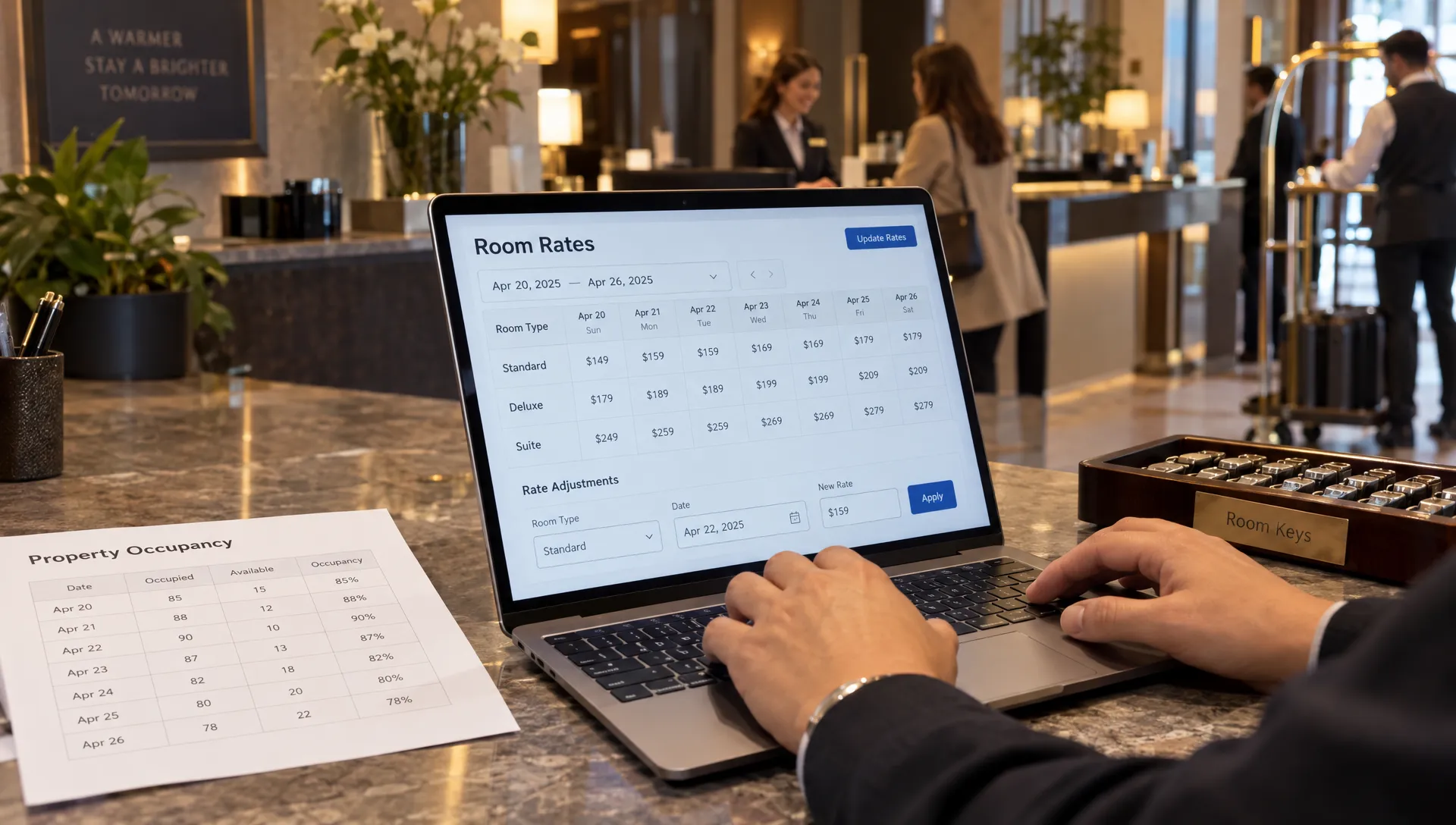
Seasonal hotel offers need to be discoverable before rooms need filling. Effective Google search optimization connects the right travel query to a clear package page, then carries the guest into a booking journey that preserves the advertised dates, inclusions and price.
That connection often breaks in ordinary ways: a spring package appears only in a homepage banner, last year’s offer remains indexed or the booking engine opens without the package selected. Better rankings alone will not fix those problems.
For hotel groups, the task also extends beyond traditional results. Prospective guests may discover properties through Google Maps, Google AI Overviews or an assistant comparing family breaks. Each surface needs reliable information about the property and its current offers.
The practical approach is to work backward from the guest’s decision: what they want, when they research, which facts they need and how they book. The following plan covers page structure, technical checks, AI discoverability and measurement, with priorities that a hotel marketing team or agency can put into a seasonal campaign brief.
Build Google search optimization around the booking window
A seasonal campaign has two calendars: when guests stay and when they choose. Use your own booking lead-time data, previous campaign performance and Search Console queries to identify the research period. A holiday weekend and a school-break package may require different launch schedules.
Map each offer to a specific booking intent rather than targeting a broad phrase such as “hotel deals.”
| Guest query | What the page needs to establish | Suitable destination |
|---|---|---|
| Spring hotel package in Asheville | Dates, location, inclusions and total cost | Spring package page |
| Family hotel with Easter activities | Children’s ages, activity schedule and supervision | Family seasonal offer |
| Romantic winter break with spa | Spa access, treatments and reservation requirements | Couples package page |
| Hotel near Christmas market | Walking distance, market dates and transport | Property-specific festive page |
These are illustrative query themes, not search-volume estimates. Validate them against the language guests already use in inquiries and search data.
Separate the group’s overview page from each property’s offer. A collection page can help travelers compare destinations, while a property page answers whether a particular package fits their dates and needs. Do not create near-identical pages for every keyword variation; that fragments useful information and increases maintenance work.
Give recurring offers stable, discoverable URLs
A durable URL makes Google search optimization easier to maintain across seasons. For a genuinely recurring package, a descriptive path such as /offers/spring-break/ is usually more useful than creating a new dated URL every year.
Update the page when the next offer is confirmed. Retain useful destination information, refresh photographs where necessary and replace expired booking conditions. Keeping a URL does not preserve relevance if the content still describes last year’s package.
For a one-time event that will not return, choose a deliberate end state. Keep a clearly labeled archive if the information remains useful. Redirect only when there is a close replacement. Otherwise, a proper 404 or 410 response can be more appropriate than sending every expired offer to the homepage.
Link current packages from the property page, offers hub and relevant destination guides. An XML sitemap helps discovery, but it should not be the only route to an important revenue page.
Google distinguishes crawling, indexing and serving search results. A page must be discovered and accessible before it can be considered for indexing, and indexing does not guarantee rankings. Publishing a landing page is therefore the beginning of the process, not proof that guests can find it.
Make the offer understandable before asking for a booking
Strong Google search optimization depends on a page that resolves the guest’s actual questions. A seasonal offer should stand on its own without requiring visitors to open a PDF, interpret a promotional image or call reception for basic conditions.
Put the package name, property, destination, eligible stay dates and main inclusion near the top. Follow with the price basis, restrictions and a booking action that matches the offer.
A useful publishing checklist includes:
- Dates: Booking deadline, stay period, blackout dates and minimum stay.
- Price: Occupancy basis, applicable taxes and mandatory fees, plus any conditions attached to a “from” rate.
- Inclusions: Exactly what breakfast, dining, parking, activities or spa access covers.
- Eligibility: Children’s age limits, pet conditions and room-type restrictions.
- Booking terms: Cancellation rules, deposits and whether inclusions require advance reservations.
For example, “spring family escape” says little on its own. An illustrative description such as “Two nights with breakfast and one supervised workshop for children ages 6 to 10” gives guests something concrete to evaluate, provided every detail is confirmed.
Use a concise title such as “Spring Family Hotel Package in Asheville | Property Name.” The meta description should summarize the real benefit and key condition. Google may generate a different search snippet, so the visible page must communicate those facts too.
Remove technical barriers before expanding content
Technical Google search optimization should begin with the route from search result to completed reservation. Test the live mobile page, not just a CMS preview.
Confirm that the page returns a successful status, permits indexing and uses a canonical URL consistent with the version you want indexed. Check that robots rules, consent tools or JavaScript errors do not hide essential offer details from crawlers. Use Search Console’s URL Inspection tool to investigate Google’s view of the page.
Then follow the booking button. Does it preserve the property, offer code and eligible dates? If the guest must reconstruct the package manually, additional traffic may produce little additional revenue.
Page performance matters because seasonal pages often contain oversized photography, videos and third-party widgets. Google’s recommended “good” Core Web Vitals thresholds are LCP within 2.5 seconds, INP at or below 200 milliseconds and CLS at or below 0.1, assessed at the 75th percentile of visits.
Use those as diagnostic targets, not a promise of rankings. Compress images, reserve their display dimensions and remove unnecessary scripts. Prioritize changes that let mobile guests read the offer and reach booking controls without delays or shifting content.
Use structured data to reinforce visible facts
Structured data gives machines explicit labels for information already on the page. For Google search optimization, its role is clarification, not a substitute for accessible content or a shortcut to special search features.
Describe the property using the appropriate schema.org type, such as Hotel, and maintain consistent names, addresses and identifiers. Use Offer only when it accurately represents visible information. A generic offer annotation does not automatically make a seasonal package eligible for hotel rate displays or other rich results.
Keep descriptions, prices, currencies and availability conditions synchronized with the page. If the rate changes in the booking engine but not in the markup, the inconsistency can undermine trust and create a poor guest experience.
The property is also an entity: a specific real-world business with a recognizable name, location and official website. Consistency across the site, business listings and relevant third-party references helps systems connect those records.
Visible FAQs can answer questions about dining times, accessibility or cancellation. Add them because guests need the answers, not because you expect FAQ rich results. Most commercial hotel websites do not qualify for Google’s FAQ rich-result presentation.
Make seasonal facts usable in AI-generated answers
AI discovery adds another measurement layer to Google search optimization. Generative Engine Optimization (GEO) focuses on how content is represented in generated responses. Answer Engine Optimization (AEO) focuses on making useful answers easy to retrieve and understand. Both rely on accurate, accessible source material.
Test realistic prompts across ChatGPT, Google AI Overviews, Gemini, Perplexity, Claude and Copilot. For example: “Which hotels in this destination offer a spring family package with breakfast?” Availability of generated answers varies, so record the engine, date, location context and exact prompt.
Distinguish a brand mention from a citation. An assistant may name a hotel without linking to it, or cite a property page without identifying the seasonal package. Check the accuracy of each answer, especially dates, inclusions and restrictions.
Google’s guidance on AI features and websites says there are no additional technical requirements or special schema needed for AI Overviews or AI Mode beyond the relevant Search requirements. An llms.txt file can provide an optional machine-oriented guide, but it is not a Google indexing requirement or a guarantee of AI inclusion.
Support the package with local evidence
Keep each property’s Google Business Profile accurate, including its website, address, contact information and relevant amenities. Local visibility depends on more than the seasonal landing page, and a package cannot compensate for incorrect property information.
Show why the season matters in that destination. Confirm event dates with the organizer, describe realistic travel times and distinguish hotel-operated experiences from third-party activities. Avoid implying that an event ticket or transfer is included when it is merely available nearby.
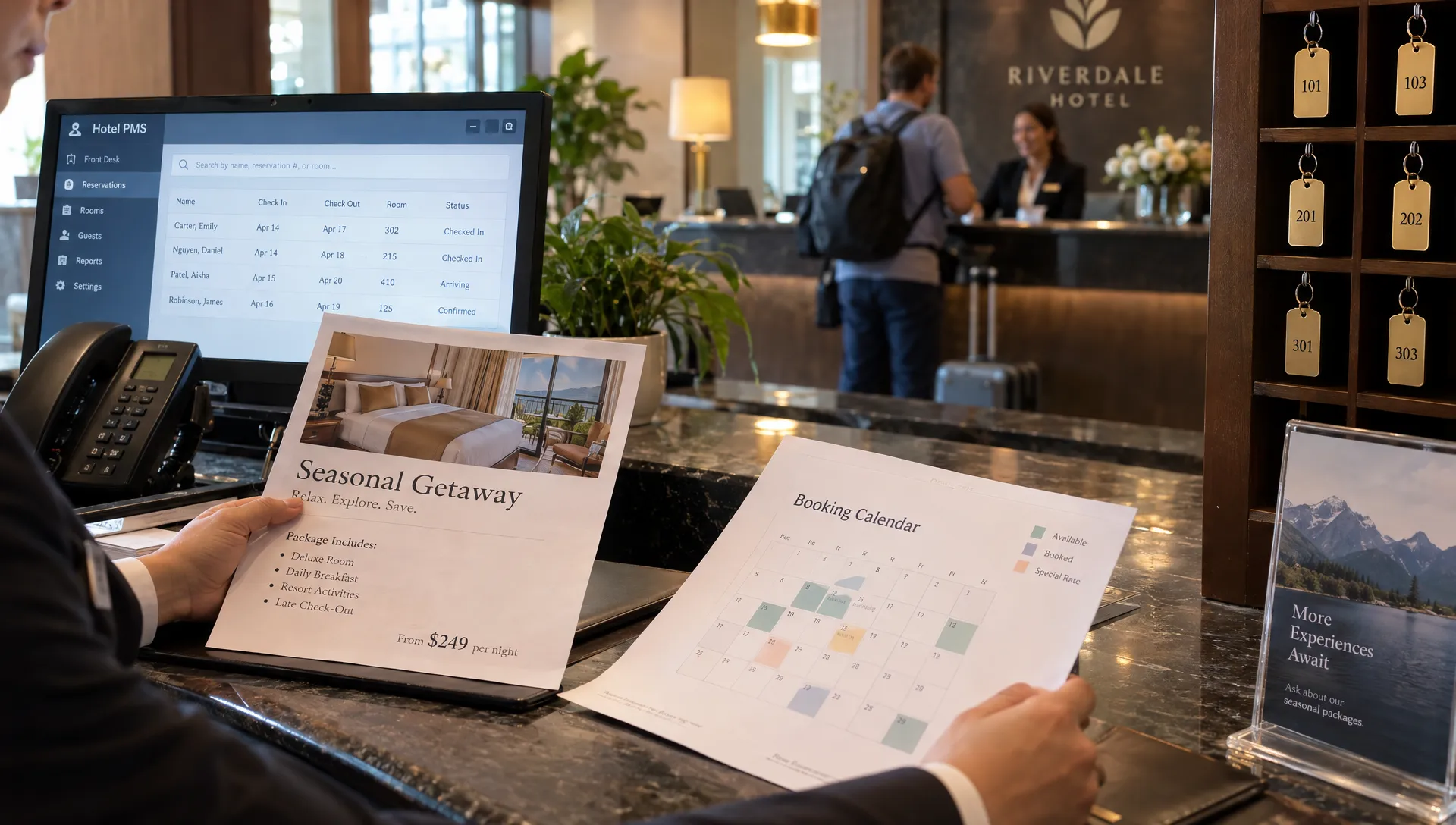
For a Dutch property developing a school-break package, a supplier such as Entertainmens, which lists shows, acts and workshops, can help the team scope a potential activity. Confirm availability, suitability and contractual terms before advertising it as part of the stay.
This is where Google search optimization meets offer design: specific, deliverable experiences give the page useful substance. A generic “unforgettable getaway” does not explain why a guest should book.
For multi-property groups, maintain a shared fact sheet but let each hotel contribute local details. If AI answers omit a property or repeat incorrect information, investigate the website visibility gaps that can affect hotel bookings rather than simply publishing more copy.
Run a staged launch instead of a last-minute upload
Start preparation before the observed research window, allowing time for approvals, development and discovery. The schedule below is an illustrative workflow, not a universal SEO timeline.
| Stage | Practical work | Release condition |
|---|---|---|
| Offer planning | Confirm inventory, economics, inclusions and cancellation terms | Revenue and operations approve the same offer |
| Page preparation | Update the URL, copy, imagery and internal links | Every advertised detail is supported |
| Technical testing | Check indexing controls, mobile performance and booking handoff | Guests can reach the correct available package |
| Launch | Publish, update discovery links and inspect the URL | Page is accessible and tracking is tested |
| In-season review | Monitor queries, availability, bookings and AI answers | Errors receive an owner and correction date |
| Closeout | Remove expired claims and decide the URL’s next state | No active journey promotes an unavailable offer |
Treat Google search optimization as a coordinated release across marketing, revenue management and operations. Assign one owner to the final fact check, even if several teams contribute.
For a small team, fix an indexability error or broken booking handoff before commissioning another destination article. For a hotel group, establish a reusable template, then test it on a limited set of properties before rolling it across the portfolio.
Measure bookings, not just seasonal traffic
Create a baseline before making changes. Record the launch date, eligible inventory, package conditions and other promotions so later comparisons have context.
Search Console can show query impressions, clicks and landing-page performance. Your analytics and booking systems should show progression from offer view to booking start and confirmed reservation. If the booking engine uses another domain, verify cross-domain measurement and payment-provider handling before trusting attribution.
Evaluate Google search optimization with both commercial and discovery metrics. Track confirmed bookings and booking value alongside nonbrand visibility, booking-start rate and completed-booking rate. Separate property-name searches from generic package searches where possible.
For AI monitoring, use a stable prompt set and record whether your brand appears, whether the answer is accurate and whether the assistant cites the correct page. Define share of voice explicitly, such as the percentage of monitored recommendation responses that mention your brand. It is a sample-based metric, not a measurement of every traveler’s conversation.
An illustrative campaign might move from 40 bookings on 1,000 visits to 48 bookings on 800 visits. Traffic fell 20%, but bookings rose 20%. That is why clicks alone cannot determine whether the offer performed better.
Diagnose changes before changing the strategy
Compare equivalent booking windows, weekdays, school holidays and available inventory. A sold-out room category or changed minimum stay can affect results independently of search visibility.
If impressions fall, investigate demand, indexing and competitive changes. If clicks hold steady but booking starts decline, examine message clarity, price competitiveness and the booking handoff. If starts remain stable but completed bookings fall, review availability, payment issues and cancellation conditions.
Use a structured comparison to separate algorithm effects from seasonality before rebuilding pages. A clear diagnosis prevents teams from treating an operational problem as a content problem.
Frequently asked questions
How early should a seasonal hotel offer go live? Publish before your historical research and booking window, with additional time for production and technical checks. Google search optimization has no guaranteed turnaround, so a fixed rule such as “publish 30 days ahead” will not suit every destination or package.
Should we create a new page for every season? Create a distinct page when the offer serves a meaningfully different guest need. Reuse a stable URL for a recurring package when its purpose remains consistent, and update all dates and conditions before promoting it again.
Can structured data guarantee visibility in AI answers? No. Accurate markup can clarify information, but it does not guarantee indexing, rich results, brand mentions or citations. Accessible content, consistent property facts and independent references remain important.
Start with a free AI visibility audit
Begin with one property and one upcoming offer. Identify whether the main constraint is discovery, inaccurate information, page usability or booking conversion before expanding the campaign.
Start with a free AI visibility audit from CapstonAI. CapstonAI helps teams track brand mentions, citations and competitor visibility across AI engines, then prioritize content and technical improvements. Use those findings alongside Search Console and booking data to choose the next fix and measure what changes.