Google AI content is not a separate content format. It is the same public web content your prospects read, structured so Google Search, Google AI Overviews, Gemini and other generative engines can understand, verify and cite it.
That distinction matters. If AI-assisted publishing only increases volume, it can create duplicate pages, vague claims and conflicting facts. If it is governed by standards, it can improve answer coverage, strengthen entity signals and make your brand easier to cite in AI-generated responses.
For hotels, franchises, healthcare groups, e-commerce teams and agencies managing many sites, the goal is not to “write for AI.” The goal is to publish pages that are useful to humans, machine-readable for search systems and consistent with the real business.
What Google AI content means in practice
Google has been clear that automation itself is not the problem. In its Search Central spam policies, Google says using automation primarily to manipulate rankings is spam. The risk is not that AI touched the draft. The risk is publishing content that lacks originality, evidence, quality control or a clear user benefit.
Google AI content standards should therefore answer three operational questions:
- Can a person trust this page enough to make a decision? For example, book a room, request a quote, compare providers or choose a clinic location.
- Can Google and generative engines parse the page without guessing? That means clear headings, clean HTML, structured data, strong internal links and consistent entity information.
- Can the business prove and maintain what the page claims? If policies, prices, locations, services or inventory change, the page needs a source of truth and an update process.
Classic SEO, AEO and GEO overlap here. Technical SEO makes the page crawlable and indexable. Answer Engine Optimization, or AEO, turns content into concise answers for user questions. Generative Engine Optimization, or GEO, improves the chance that AI systems mention, cite or reuse your brand when generating a response.
The business effect is direct. A page that is clear, current and verifiable is more likely to support traffic from search, citations in AI answers, local discovery, qualified leads and conversion confidence.
The visibility risks of low-standard AI content
Most AI content problems do not look dramatic at first. They look like ordinary CMS clutter.
A hotel group may publish 80 near-identical destination pages with only the city name changed. A franchise may create local service pages that repeat national copy but omit address, service area and staff details. An e-commerce site may generate product descriptions that sound polished but fail to include compatibility, dimensions, warranty terms or shipping constraints.
To a generative engine, these pages create uncertainty. The model may know the brand exists but lack enough specific, corroborated information to include it in an answer. Or it may mention a competitor whose pages are more structured, more specific and better cited.
Common failure patterns include:
- Generic paragraphs that do not answer the actual buying question
- Conflicting facts across the page, schema, Google Business Profile, FAQs and third-party listings
- Missing authorship, review process or evidence for advice-heavy content
- Thin location pages that do not prove local relevance
- JavaScript-rendered content that is difficult to crawl
- Slow pages that degrade user experience and reduce conversion opportunity
- No measurement of AI mentions, citations or share of voice
A traditional rank tracker may miss these gaps. Your page can rank for a keyword and still be absent when ChatGPT, Perplexity, Claude, Copilot or Gemini answers a detailed buyer question.
Standard 1: every page needs a defined answer role
Before drafting or prompting, define what the page should help the user decide. This is the most important content standard because it prevents AI-assisted publishing from becoming generic scale content.
A page should not target a keyword in isolation. It should own a decision point.
| Page type | AI-ready role | Evidence the page should include | Business effect |
|---|---|---|---|
| Hotel location page | Help travelers decide whether this property fits a trip | Address, nearby landmarks, room types, amenities, policies, booking path | More qualified booking sessions |
| Franchise service page | Prove a local branch provides a specific service | Service area, local contact details, staff or facility context, FAQs | More local leads and fewer mismatched inquiries |
| E-commerce product page | Help buyers compare and validate a product | Specs, use cases, compatibility, availability, shipping and returns | Better conversion confidence |
| Agency case study | Show capability through proof | Client context, problem, actions, measured outcome, timeline | Stronger sales credibility |
| IT services page | Clarify scope and fit | Supported environments, response model, compliance context, onboarding steps | Higher-quality demos or consultations |
This is where AEO earns its place. AEO is not about stuffing FAQs onto every page. It is the discipline of answering the exact questions users ask before they convert.
For example, a traveler does not only search “hotel in Denver.” They may ask, “Which hotels near Denver airport have a shuttle, allow pets and offer late check-in?” A page built for that answer needs policy detail, transportation detail, local context and structured information. A beautiful but vague page will not compete well in AI answers.
Standard 2: make entities unmistakable
AI systems rely heavily on entities, meaning identifiable things such as a brand, location, product, person, service or organization. If your entities are unclear, inconsistent or disconnected, generative engines have to infer too much.
For multi-site brands, entity clarity starts with consistent basics: official brand name, address, phone number, service area, business category, parent brand relationships and location-specific details. For e-commerce, it includes product names, SKUs, categories, variants and brand relationships. For agencies and service providers, it includes leadership, service lines, case studies and client industries where disclosure is appropriate.
Structured data helps reinforce these entities. Organization, LocalBusiness, Hotel, Product, FAQPage, Article and BreadcrumbList schema can all make important page relationships more explicit when used accurately. Google’s structured data documentation emphasizes that markup should match visible page content, which is a useful rule for AI content governance too.
Internal linking also matters. A location page should connect to relevant amenities, service pages, nearby destination guides and booking flows. A product page should connect to category hubs, comparison guides and support information. These links teach search systems how your content fits together.
If you need a deeper framework for credibility signals, CapstonAI’s guide to AI trust signals that make brands more citable explains how entity clarity, corroboration and content structure support AI citations.
Standard 3: separate claims from proof
AI-generated drafts often sound confident before they are verified. That is a publishing risk, especially in regulated, high-consideration or multi-location industries.
A practical standard is to classify every important statement as one of three types:
| Statement type | Example | Required support |
|---|---|---|
| Stable fact | “This location offers on-site parking.” | Source of truth in CMS, property system or operations document |
| Time-sensitive fact | “Same-day appointments are available.” | Update workflow and owner responsible for accuracy |
| Performance claim | “Our process reduces onboarding time.” | Case study, analytics data or documented methodology |
This standard prevents unsupported copy from reaching pages that AI systems may summarize. It also protects conversion credibility. A user who finds one inaccurate detail is less likely to trust the booking form, quote request or checkout page.
For B2B teams, CRM and pipeline data can be part of the proof layer. If a service page claims faster follow-up, better forecasting or improved sales operations, those claims should come from real reporting practices rather than generic language. A useful example is how CRM reports based on real business data can track pipeline, conversion, activity, forecast and receivables for smaller businesses.
The same principle applies outside sales. Hotels need property management and policy data. Clinics need location and provider data. E-commerce teams need product information management, inventory feeds and customer support policies. Content quality improves when the source data is real.
Standard 4: write for extraction, not just reading
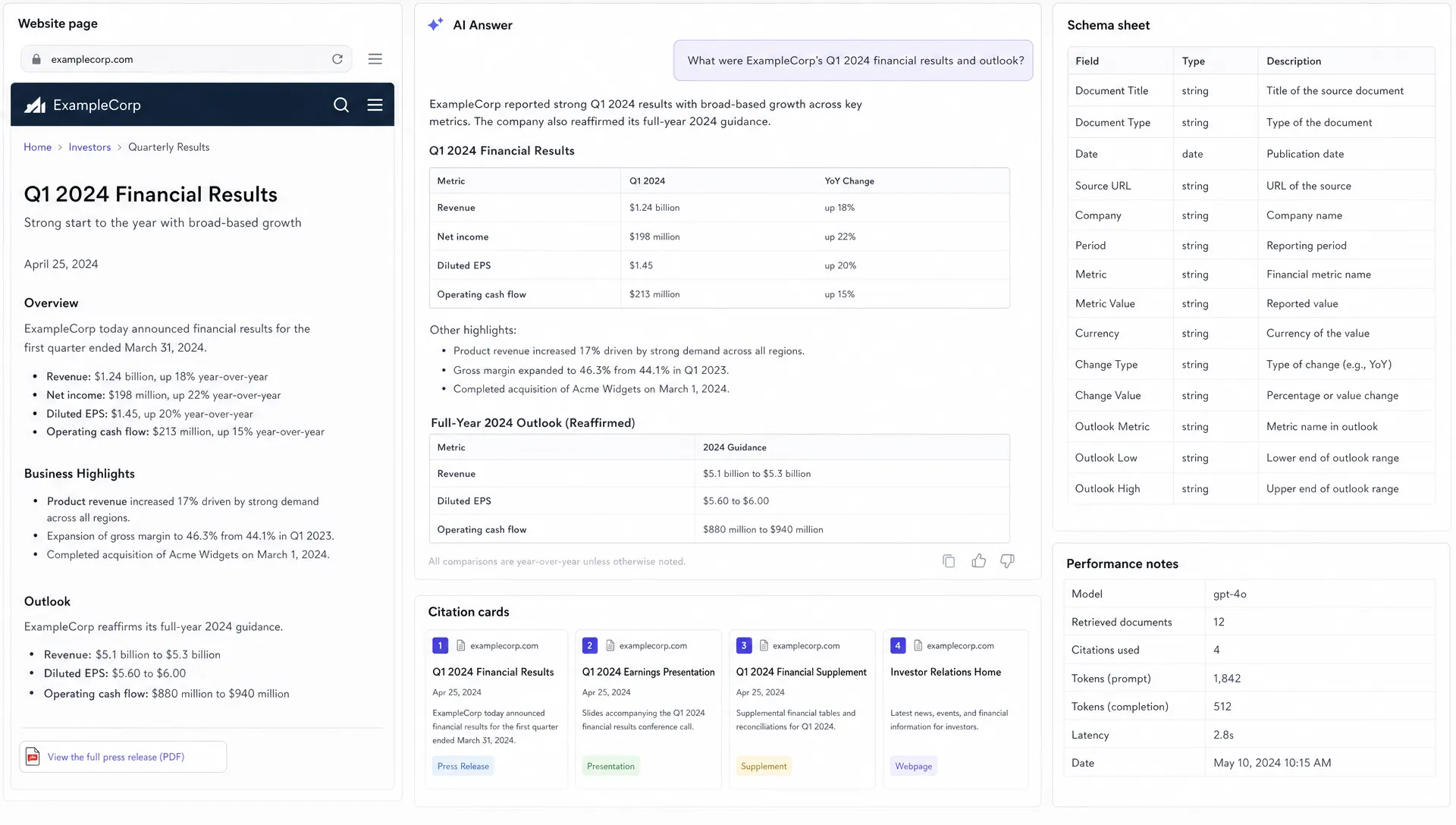
Generative engines break pages into passages, compare them with other sources and assemble answers. Long narrative content can still perform, but the facts inside it need to be easy to extract.
A strong Google AI content standard uses:
- Descriptive H2 and H3 headings that match real user questions
- Short answer blocks near the top of key sections
- Tables for comparisons, specs, policies and location details
- FAQs only when they answer questions not already handled clearly in the body
- Schema that reflects visible content
- Clear author, reviewer or business ownership where relevant
This is especially important for Google AI Overviews. AI Overviews may cite pages that provide concise, well-supported answers to parts of a broader query. If your page buries the answer under brand copy, the passage may be less useful.
For a more tactical breakdown of source selection and page structure, see CapstonAI’s guide on how to optimize for Google AI Overviews.
Standard 5: technical SEO still decides what AI can access
AI visibility depends on access. If search crawlers and AI-oriented systems cannot reach, render or interpret the content, good writing will not compensate.
Core technical standards include crawlability, indexability, canonical accuracy, internal link depth, mobile usability, structured data validation and page performance. For large WordPress, WooCommerce, franchise and multi-location sites, these basics often break during theme changes, plugin updates, migrations or content scale-up.
Page performance is not only an SEO concern. Slow pages reduce the chance that users complete bookings, forms and checkouts after they arrive. Google’s Core Web Vitals define good user experience thresholds as Largest Contentful Paint at 2.5 seconds or faster, Interaction to Next Paint at 200 milliseconds or faster and Cumulative Layout Shift at 0.1 or lower.
| Technical standard | What to check | Why it affects AI visibility |
|---|---|---|
| Crawlability | Robots.txt, noindex tags, blocked resources, XML sitemaps | Search systems need access before they can evaluate or cite content |
| Renderability | Server-side HTML, JavaScript dependencies, lazy-loaded content | Important facts should not be hidden from crawlers |
| Structured data | Valid schema that matches visible content | Helps clarify entities, relationships and page purpose |
| Internal linking | Hub pages, breadcrumbs, related pages, location hierarchies | Shows which pages matter and how topics connect |
| Performance | Core Web Vitals, image weight, scripts, hosting quality | Supports user experience and conversion after discovery |
| llms.txt | A plain-text guide to important AI-readable resources | Can help document key content for AI-oriented crawlers, but does not replace sitemaps or schema |
llms.txt deserves precision. It is an emerging convention, not a guaranteed Google ranking factor and not a substitute for robots.txt, XML sitemaps or structured HTML. Used well, it can help teams document important public resources for AI systems and keep their AI-facing content inventory organized.
Standard 6: build freshness into the workflow
AI content standards fail when they stop at publication. Search visibility is protected through maintenance.
This is where multi-location and multi-brand organizations face a real operational challenge. A single policy change can affect dozens or hundreds of pages. A new clinic service, discontinued product, seasonal hotel amenity or franchise location change can create inconsistencies across body copy, schema, FAQs, location pages and external listings.
A practical governance model assigns each critical content type an owner, update frequency and source system.
| Content area | Typical owner | Update trigger |
|---|---|---|
| Location details | Operations or local marketing | Address, hours, phone, service area or facility changes |
| Product details | Merchandising or e-commerce | Inventory, pricing, specs, variants or return policy changes |
| Service pages | Practice lead or service owner | New offering, compliance change or positioning update |
| FAQs | Support, sales or front desk teams | Repeated customer questions or policy confusion |
| Case studies | Sales, delivery or account teams | New measurable outcome or permission to publish |
Freshness does not mean changing text for the sake of activity. It means the page remains aligned with reality. For AI systems, consistency across current public sources can make the difference between being cited confidently and being skipped.
Standard 7: measure AI visibility separately from rankings
Search visibility used to be mostly page-first: position, impressions, clicks and conversions. AI visibility is more entity-first and prompt-first. A brand can appear inside an AI answer without a traditional blue-link click, or it can rank well and still be absent from the generated answer.
Measurement needs to include:
- Brand mentions: Whether your business appears in AI answers for relevant prompts
- Citations: Whether AI systems cite your pages or third-party sources that mention you
- Share of voice: How often you appear compared with competitors across a prompt set
- Prompt mapping: Which questions surface your brand, and which surface rivals
- Citation quality: Whether cited pages are accurate, current and conversion-relevant
- Blind spots: High-value prompts where your brand is absent or misrepresented
For example, a hotel group may track prompts by destination, traveler type, amenity and season. A healthcare franchise may track prompts by service, insurance context, location and urgency. A WooCommerce store may track prompts by product category, use case, comparison and troubleshooting need.
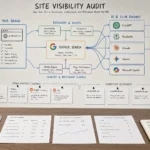
CapstonAI’s guide on checking site visibility across Google and AI engines explains why traditional visibility checks need to be expanded with AI mention and citation analysis.
CapstonAI is built around this measurement-first workflow. It scans visibility across major AI and generative engines, tracks brand mentions and citations, maps prompts that surface you or your competitors, then helps prioritize content, metadata, schema and technical fixes.
A publishing checklist for Google AI content
Use this checklist before publishing AI-assisted or AI-optimized pages. It is intentionally practical because content standards only work when editors, SEOs, developers and business owners can apply them consistently.
| Check | Pass condition |
|---|---|
| Search intent | The page answers a specific user decision, not only a keyword target |
| Original value | The page includes facts, examples, expertise or data not found in generic AI output |
| Entity clarity | Brand, location, product, author or service entities are named consistently |
| Proof | Claims are supported by first-party data, visible evidence or credible sources |
| Structure | Headings, summaries, tables and FAQs make key answers easy to extract |
| Schema | Structured data is valid and matches visible page content |
| Internal links | The page connects naturally to relevant hubs, services, locations or products |
| Crawlability | Indexing, robots directives, canonicals and rendering are clean |
| Performance | The page is fast enough to support both discovery and conversion |
| Monitoring | The page is included in AI visibility scans and prompt tracking |
The checklist is useful for single pages, but it becomes more valuable when applied at scale. Agencies can turn it into a QA process for clients. Franchise brands can apply it to location templates. E-commerce teams can use it for categories and high-margin products. Hotel groups can use it across properties, destinations and amenity pages.
Common mistakes to avoid
The first mistake is treating AI as a volume machine. Publishing more pages does not automatically create more visibility. In AI search, generic pages often compete poorly because they lack specific, citable information.
The second mistake is separating content from technical SEO. A strong answer that loads slowly, renders poorly or sits five clicks deep may not perform as expected. AI visibility needs content quality and technical access together.
The third mistake is assuming Google AI content only matters inside Google. Google AI Overviews and Gemini are important, but buyers also ask ChatGPT, Claude, Perplexity and Copilot. Each system may use different retrieval patterns, citations and freshness signals. Your measurement model should look across engines, not only one interface.
The fourth mistake is ignoring competitors. If rivals are mentioned more often, cited from stronger pages or described more accurately, that is not just an SEO issue. It is a market visibility issue.
Frequently Asked Questions
Does Google penalize AI-generated content? Google does not penalize content only because AI was used. The risk comes from scaled, low-value or manipulative content. AI-assisted pages still need originality, accuracy, usefulness and quality control.
What is the difference between SEO, AEO and GEO? SEO helps pages get crawled, indexed and ranked in search engines. AEO structures content to answer specific questions clearly. GEO focuses on how generative engines mention, cite and summarize your brand in AI answers.
Do I need schema for Google AI content? Schema is not a magic visibility switch, but it helps clarify entities, page purpose and relationships when it accurately matches visible content. For many businesses, schema is a core AI-readiness standard.
Is llms.txt required for AI visibility? No. llms.txt is an emerging convention and should not replace robots.txt, XML sitemaps, clean HTML or schema. It can be useful as part of a broader AI visibility governance process.
How should multi-location brands manage AI content quality? Start with consistent templates, verified location data, local proof points, accurate schema and a review workflow. Then monitor prompts by location, service and competitor to find visibility gaps.
Start with a free AI visibility audit
Google AI content standards protect search visibility because they make your business easier to understand, verify and cite. The work starts with a clear baseline: where your brand appears, where competitors appear and which pages AI systems can trust.
CapstonAI helps brands, retailers, agencies and multi-site teams measure and improve that baseline across Google AI Overviews, ChatGPT, Gemini, Perplexity, Claude and Copilot. Start with a free AI visibility audit to see what AI can see, what it misses and which fixes should come first.