Perplexity has quietly become one of the most commercially important “answer engines” because it does something that most chatbots still struggle with in practice: it shows its sources. For brands, that changes the game. Your visibility is no longer just about ranking a blue link, it is about whether your pages (or trusted third parties) are chosen as citations when Perplexity generates an answer.
If Perplexity cites you, you can win mindshare even when the user never clicks. If it cites someone else (or worse, cites a low quality page about you), Perplexity can steer demand, trust, and purchase intent away from your brand.
What Perplexity AI is doing differently (and why citations are the product)
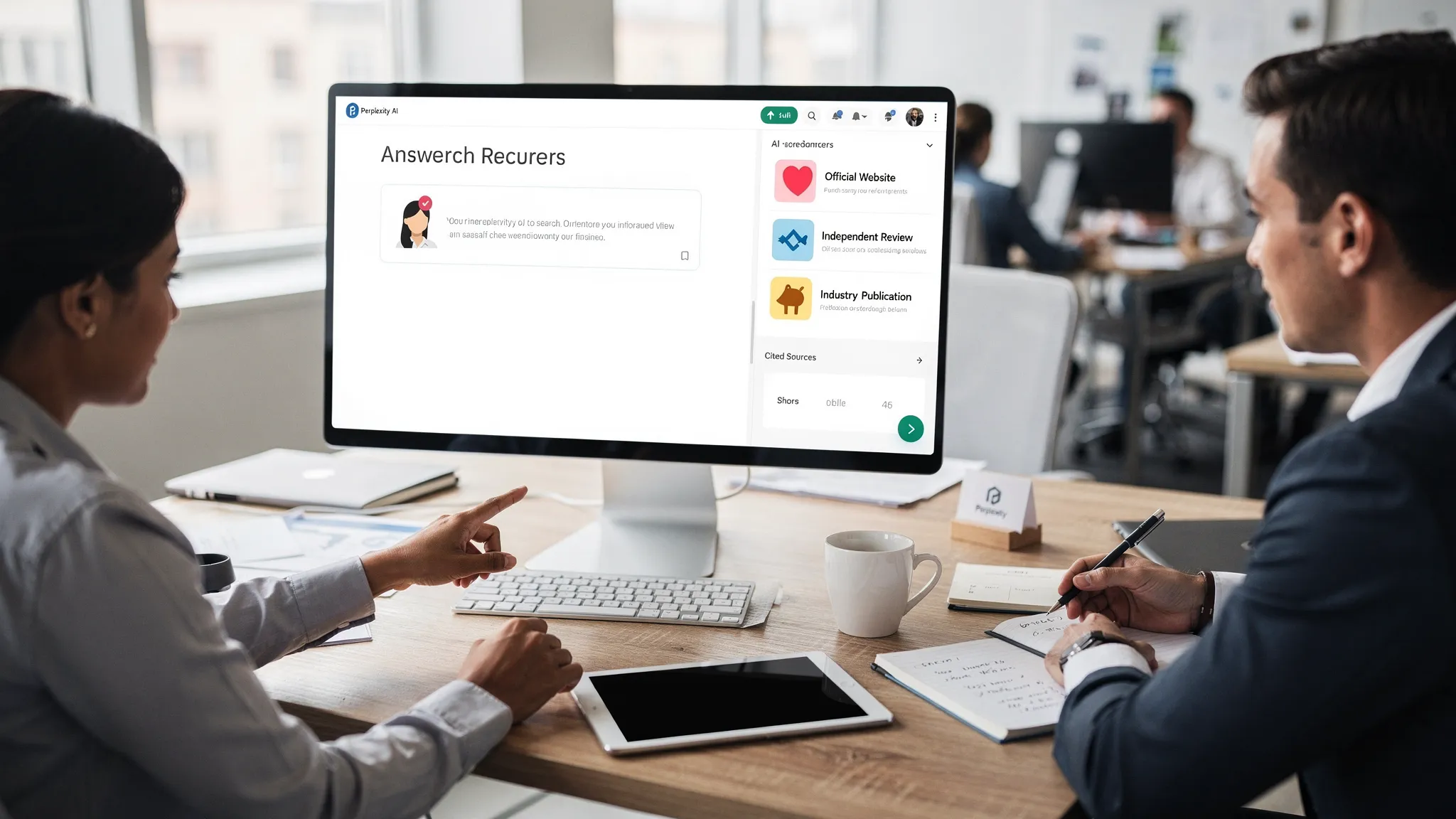
Perplexity positions itself as an AI-powered search experience that returns a synthesized answer with a list of sources. In other words, the user is not only asking “what is the answer?”, they are also implicitly asking “what is the evidence?” and Perplexity’s interface makes that evidence visible.
That means citations are not a nice-to-have UX detail. They are how Perplexity:
- Signals credibility (to the user)
- Reduces hallucination risk (by grounding answers in retrieved information)
- Differentiates itself from pure chat interfaces
From a brand perspective, citations become a new kind of ranking surface. You are competing to be:
- Mentioned accurately
- Included consistently across relevant prompts
- Cited from the best possible URLs (your site when appropriate, or high-trust third-party sources)
Perplexity also tends to work at a passage level, pulling specific sections that directly support a claim. So “being indexed” is not enough. Your content needs to be easy to extract, verify, and attribute.
What Perplexity tends to cite (and what that reveals about its trust model)
Perplexity’s citation choices vary by query type (definitions vs comparisons vs local intent vs “best tools”), but in brand-critical prompts, the sources usually cluster into a few predictable buckets.
Here is a practical breakdown of the source types brands most often see in Perplexity citation panels, plus what it implies for your visibility strategy.
| Source type Perplexity cites | Typical use in answers | Why it matters for brands | How to influence it |
|---|---|---|---|
| Official websites (brand, product, docs) | Pricing, specs, features, policies, locations, product availability | This is where you want Perplexity to go for “facts about you” | Publish clear, crawlable, canonical pages with scannable sections and AI-ready metadata |
| High-trust reference sources (encyclopedic, institutional, standards bodies) | Definitions, background, “what is X?” context | These sources can frame your category and sometimes define what “good” looks like | Align your terminology with widely accepted definitions and publish clarifying explainers |
| Major media and business publications | Company overviews, funding, leadership, news-driven prompts | These sources shape perception and authority, especially for B2B buyers | Earn coverage, keep press pages current, publish verifiable announcements |
| Independent reviews and comparisons | “Best” lists, alternatives, pros/cons, buyer guides | These can outrank your own claims in perceived credibility | Invest in authentic third-party validation and make your differentiators easy to quote |
| Marketplaces and app ecosystems | Tools, plugins, integrations, SaaS categories | Often used for “what integrates with X?” or “best apps for Y” | Maintain accurate listings, consistent naming, and clear feature descriptions |
| Community and UGC sources (forums, Q&A, social) | Real-world experiences, edge cases, “is it worth it?” | Can heavily influence sentiment, but quality varies | Monitor brand narratives, seed accurate answers, and publish official clarifications when needed |
Two key takeaways:
- Perplexity often cites what looks easiest to verify. Pages with direct statements, clear structure, and stable URLs are easier to quote than vague marketing copy.
- Your “brand truth” can be outsourced without you realizing it. If your site is thin, inconsistent, or hard to parse, Perplexity may rely on third parties to define you.
Why Perplexity citations matter more than clicks (especially for brands)
Traditional SEO taught teams to obsess over rankings and sessions. Perplexity introduces a different dynamic: recommendation visibility, where your brand can win or lose influence before a user ever visits your site.
1) Perplexity is shaping consideration, not just discovery
A large share of high-intent prompts are not navigational. They are evaluative:
- “Best [category] for [use case]”
- “[Competitor] vs [your brand]”
- “Is [brand] legit for [job to be done]?”
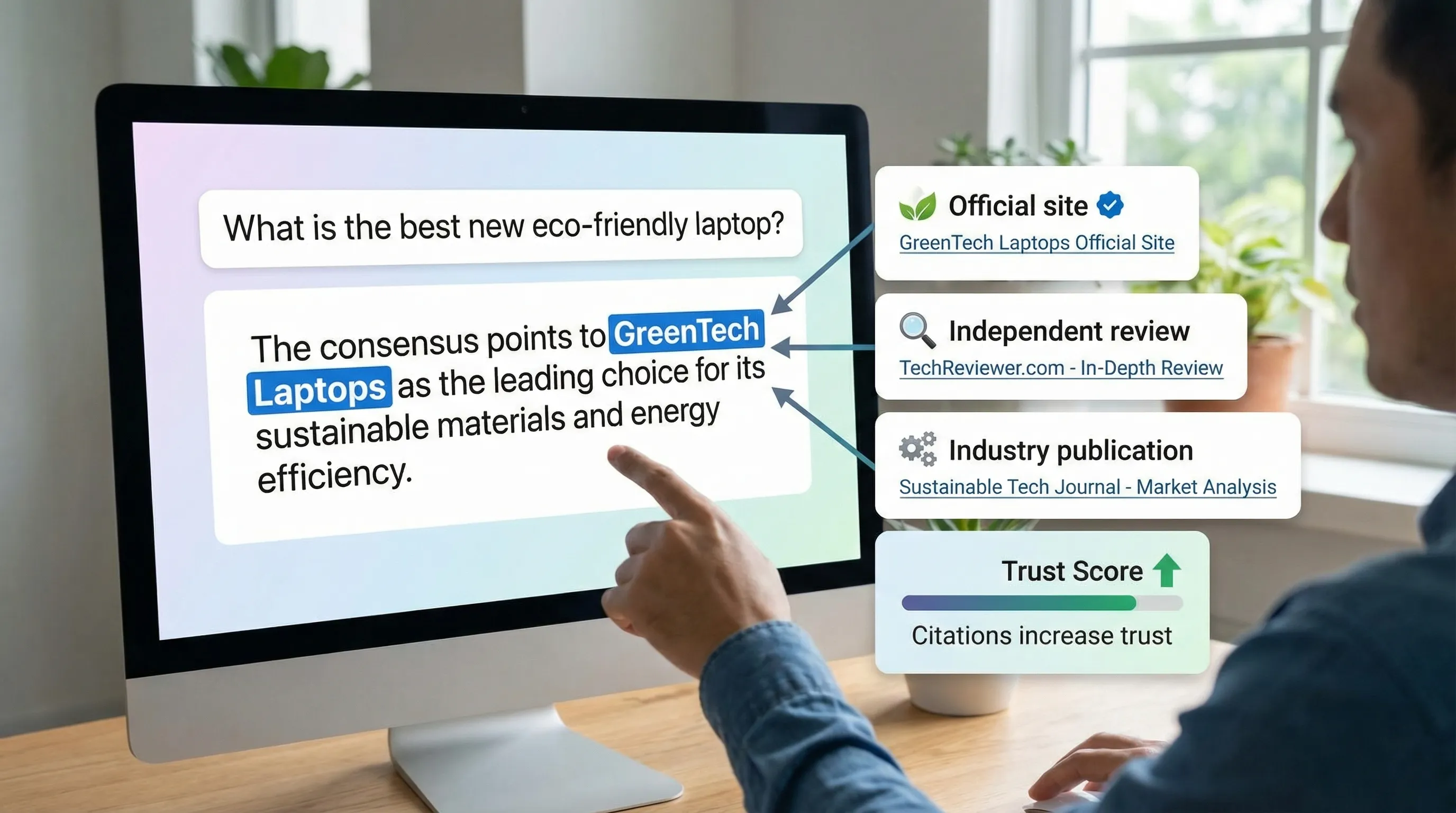
In these prompts, the user is close to a decision, and Perplexity’s citations function like “evidence cards.” If your brand is not cited (or is cited from the wrong page), you are not just losing traffic, you are losing credibility at the decision point.
2) Citations can become a proxy for trust
In buyer psychology, citations behave like references in a report. They are a signal of:
- Verifiability
- Authority
- Reduced risk
That matters in regulated categories (health, finance), expensive purchases (enterprise software, electronics), and local services (where trust and accuracy matter).
3) Mis-citations create real business risk
If Perplexity cites outdated policies, old pricing pages, scraped copies, or ambiguous third-party summaries, you can see:
- Incorrect expectations (and churn)
- Sales objections (“Perplexity says you do not support X”)
- Support load from preventable confusion
Brand defense in AI search is now a measurable discipline, not just PR.
How to think about “winning” Perplexity: prompts, passages, and proof
If you want to influence what Perplexity cites, optimize for how Perplexity constructs answers.
Prompt coverage: are you present in the questions customers actually ask?
Brands often track only a few obvious queries (their name, their product name). But Perplexity visibility is usually won on non-branded prompts:
- Category prompts: “best inventory management software for retail”
- Use-case prompts: “how to reduce stockouts in multi-location stores”
- Constraint prompts: “best [category] for small teams” or “for Africa”
- Comparison prompts: “Shopify vs WooCommerce for GEO” (example of how prompts evolve)
If you are not cited in those, you can be invisible in the very moments where demand is formed.
Passage extractability: can Perplexity easily quote a correct section?
Perplexity (like other retrieval-based systems) benefits from content that is easy to extract and attribute. Pages that win citations tend to have:
- Clear headings that match user intent (“Pricing”, “Integrations”, “Supported locations”, “Returns policy”)
- Direct, unambiguous statements (not only brand slogans)
- Lists and tables where appropriate (humans and models can scan them)
- Freshness signals (updated dates where editorially appropriate, current policy pages)
Proof: are your claims grounded in verifiable details?
Perplexity tends to reward content that reads like it can be checked. For brands, that means:
- Publishing specifics (supported standards, compatibility, availability, warranties)
- Providing references where relevant (studies, certifications, regulatory notes)
- Avoiding contradictory pages across subdomains, regional sites, or old PDFs
A practical Perplexity citation audit for brands
A useful audit is not “did we appear once?” It is “are we consistently cited across the prompts that map to revenue?”
A strong audit workflow includes four artifacts.
1) A prompt map aligned to your funnel
Create a list of prompts across:
- Awareness: “what is [category]”
- Consideration: “best [category] for [use case]”
- Decision: “[brand] pricing”, “[brand] reviews”, “[brand] vs [competitor]”
- Post-purchase: “how to use [product] for [task]”, “troubleshoot [issue]”
2) A mention and citation ledger
For each prompt, record:
- Whether you are mentioned
- Whether you are cited
- Which URL is cited (and whether it is yours)
- Competitors cited instead
- Any inaccuracies in the answer
3) A source quality review
Not all citations are equal. A citation from an outdated directory or a scraped copy of your content can be actively harmful.
Assess each cited source for:
- Accuracy
- Freshness
- Canonical ownership (is it truly your official page?)
- Brand safety (tone, sentiment, misrepresentation)
4) A fix backlog tied to business impact
Prioritize changes based on:
- Prompts closest to conversion
- Incorrect answers that create churn or support volume
- Prompts where competitors dominate citations
What to publish so Perplexity cites you (instead of everyone else)
Most brands already have “content.” The gap is usually citation-ready content.
Build a small set of “AI citation anchors” on your site
These are pages you want AI engines to treat as the source of truth. Common anchors include:
- A definitive “About” page (entity clarity: who you are, what you do, where you operate)
- Product and feature pages with concrete capabilities
- Pricing and packaging pages (or clear “request a quote” explanation)
- Integration and compatibility pages
- Location pages for multi-location brands (consistent NAP and service coverage)
- Policies (shipping, returns, warranty, privacy)
The goal is not to write more. It is to create stable, unambiguous targets that models can cite.
Make pages easy to parse: structure beats clever copy
Perplexity is not impressed by poetic brand language. It cites content that answers questions.
Improve extractability by:
- Using descriptive H2/H3 headings that mirror customer prompts
- Adding short definition blocks (“In one sentence…”) at the top of key pages
- Using tables for specs, coverage, tiers, or comparisons (when accurate and maintained)
- Avoiding burying critical details in images or interactive elements only
Publish AI-ready metadata and structured data where it’s honest and maintainable
Structured data will not magically force a citation, but it helps machines interpret entities and relationships.
For many brands, the most relevant schema types include:
Organization(orLocalBusinessfor physical locations)Product(for ecommerce and products)FAQPage(when the FAQs are real and maintained)Articlefor editorial content
Keep it accurate. Inconsistent schema is worse than no schema.
Strengthen your “third-party citation profile” intentionally
Because Perplexity often cites third parties for evaluations, your strategy should include:
- Credible reviews and comparisons you can legitimately earn
- Industry directories that are actually trusted in your category
- Partnerships and integrations that result in authoritative documentation mentions
- Expert commentary and bylines (where genuine)
This is closer to digital PR and reputation engineering than classic link building.
The metrics brands should track specifically for Perplexity
If your KPI dashboard stops at Google rankings, you will miss Perplexity-driven demand shifts.
Track a compact set of AI visibility metrics you can operationalize:
| Metric | What it tells you | Why it’s actionable |
|---|---|---|
| Presence rate (mentions / prompts tested) | Whether you show up at all | Reveals prompt gaps and missing content |
| Citation rate (citations / prompts tested) | Whether you are used as evidence | Shows if Perplexity trusts your pages |
| Citation share of voice (your citations vs competitors) | Competitive position in answers | Helps allocate content and PR investment |
| URL quality mix (official vs third party vs low quality) | Brand safety and accuracy risk | Guides which pages to fix or replace |
| Inaccuracy incidence (wrong claims observed) | Revenue and support risk | Creates a defensible remediation backlog |
Where CapstonAI fits (without guessing or hand-waving)
Perplexity visibility is measurable, but only if you treat it like a system: scan, diagnose, fix, and monitor.
CapstonAI is built for that workflow across major AI engines (including Perplexity). Based on the capabilities you’ve shared, teams use it to:
- Run AI visibility scans and track how Perplexity mentions and recommends their brand
- Do competitor and market tracking to understand who is winning citations
- Perform prompt and mention mapping so fixes align to real customer questions
- Get automated content recommendations that target citation gaps
- Push updates through CMS integration for instant fixes
- Publish AI-ready FAQ and metadata (where appropriate)
- Manage multi-location brand consistency
- Monitor share of voice analytics and critical alert dashboards
If you want a starting point, use the free AI visibility audit to identify which prompts matter, which sources Perplexity is citing today, and which fixes are most likely to move the needle.
The strategic shift to make now
Perplexity is not “another search engine to rank in.” It is a citation-first environment where visibility is earned through clarity, verifiability, and trusted references.
The brands that win in Perplexity tend to do three things consistently:
- Publish a small set of authoritative pages that function as a source of truth
- Earn and monitor credible third-party coverage that Perplexity is likely to cite
- Instrument visibility as an ongoing metric (not an occasional experiment)
When you operationalize that loop, Perplexity stops being a black box and becomes a channel you can measure, defend, and grow.